Easy to Vote—Hard to Cheat
The foundation of the American system of self-governance is liberty, and the core expression of the people’s liberty is the ability to vote in free and fair elections. Safeguarding the integrity of our elections is paramount to preserving our republic. Election Integrity will work with relevant stakeholders across the country and within states to help ensure there are strong laws in place at the local level—making it easy to vote, but hard to cheat.
Election Integrity (CEI) has a simple goal: “Easy to Vote, but Hard to Cheat.”
With that pursuit in mind, CEI developed this educational, interactive, color-coded map that compares an individual state's current election integrity laws to other states. There are three main policy areas widely acknowledged to better protect voters: photo ID requirements, strong laws against ballot harvesting, and ballots returned to election officials by Election Day. CEI weighted these three key voter protections more heavily as a guide for the comparative categories of red, yellow, and green. (Click here to learn more about CEI’s specific methodology) This map will serve to better educate Americans on the local voter protection measures needed to restore faith, trust, and confidence in our elections.
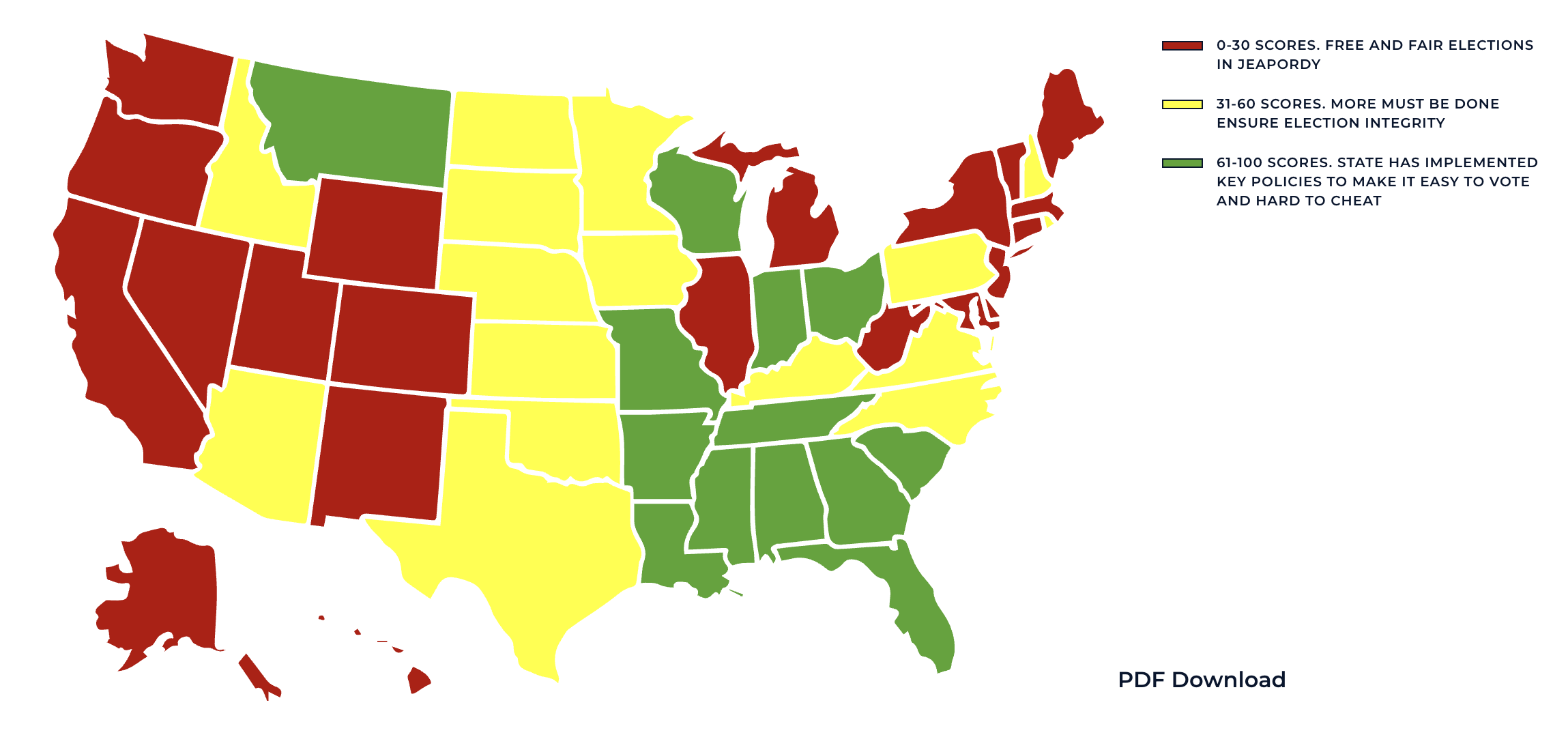
The U.S. Constitution gives State Legislatures the right and responsibility to decide how their states will conduct elections. CEI will work to educate legislators, business leaders, grassroots organizations, and other relevant stakeholders as to the importance and impact of strong election integrity measures.
Team
Topics
- The Courts
- Inflation
- Work & Jobs
- Post Secondary Education
- K-12 Education Freedom
- Public School Transparency
- American Only Elections
- Clean Votes
- Secure Elections
- Big Tech & Censorship
- Budget, Spending, & Taxes
- The Administrative State
- Border & Immigration
- Marriage, Family, & Children
- Faith & Religious Liberty
- Sanctity of Life