April 14, 2026
Workforce Education That Works for American Families
Working Families Tax Cuts Act Delivers Big Wins
The Challenge
College costs keep rising, but outcomes are not keeping pace.
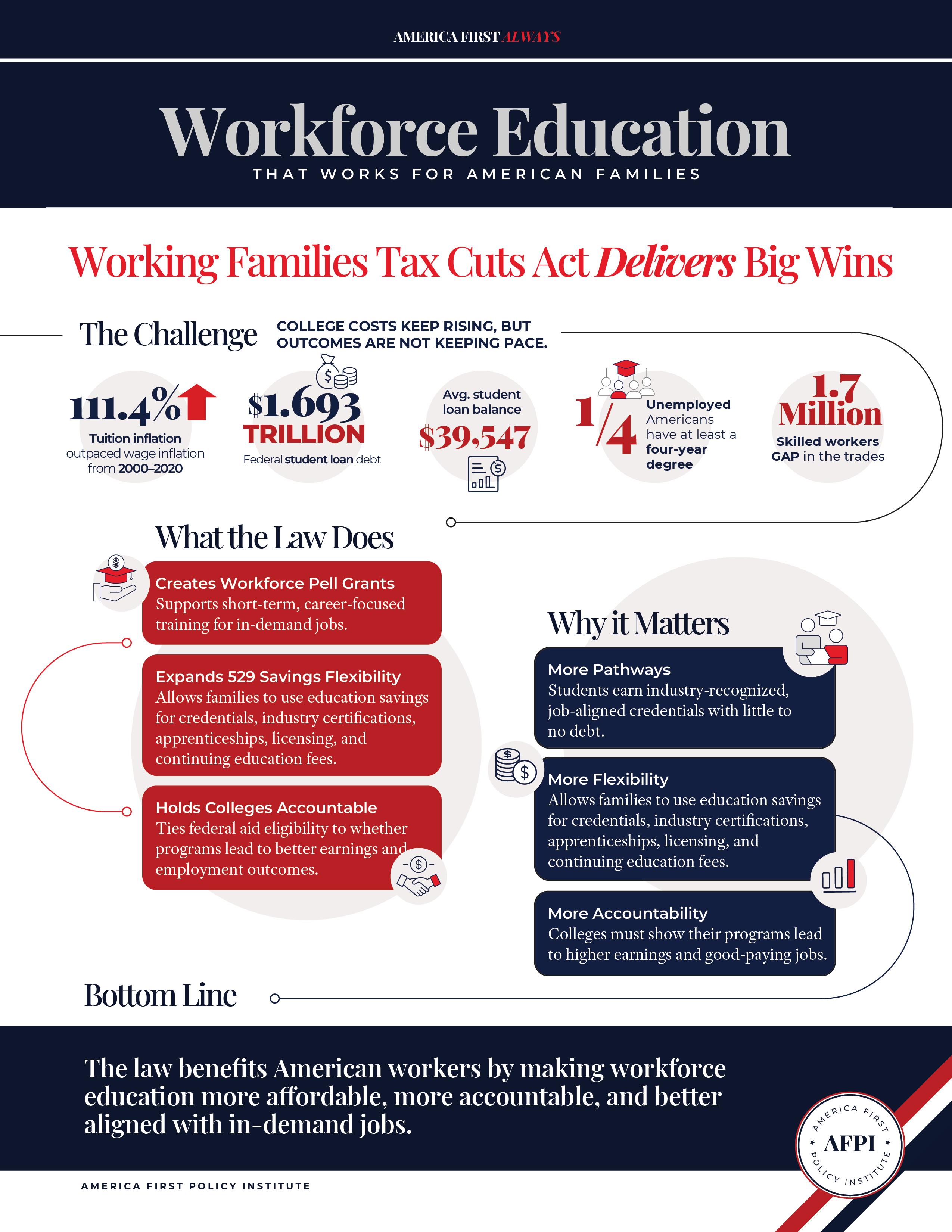
- 111.4% tuition inflation outpaced wage inflation from 2000–2020
- $1.693 trillion federal student loan debt
- $39,547 avg. student loan balance
- 1/4 unemployed Americans have at least a four-year degree
- 1.7 Million skilled workers gap in the trades
What the Law Does
- Creates Workforce Pell Grants. Supports short-term, career-focused training for in-demand jobs.
- Expands 529 Savings Flexibility. Allows families to use education savings for credentials, industry certifications, apprenticeships, licensing, and continuing education fees.
- Holds Colleges Accountable. Ties federal aid eligibility to whether programs lead to better earnings and employment outcomes.
Why it Matters
- More Pathways. Students earn industry-recognized, job-aligned credentials with little to no debt.
- More Flexibility. Allows families to use education savings for credentials, industry certifications, apprenticeships, licensing, and continuing education fees.
- More Accountability. Colleges must show their programs lead to higher earnings and good-paying jobs.
Bottom Line
The law benefits American workers by making workforce education more affordable, more accountable, and better aligned with in-demand jobs.