The Honorable Michael Faulkender
June 30, 2026
Affordable Abundance: A Seven-Point America First Economic Plan
Key Takeaways
« Robust growth and affordable prices are central to the America First economic plan that will generate prosperity for all Americans.
« Empowering the ingenuity and diligence of individual Americans and the private sector, rather than government, is how we meet the needs of our diverse nation.
« Our plan calls for unleashing American natural resources, reducing government overreach, slashing out-of-control federal spending, extending pro-growth tax reform, securing the capital markets, enacting pro-American trade policies, and improving healthcare.
Introduction
The choice confronting Americans of which economic path to follow could not be starker. The America First path is steeped in the wisdom and ability of the American people to chart their own destinies. The other path forwarded by the progressive Left—a government-first path that has unleashed a cost-of-living crisis fueled by a tsunami of spending—puts its trust in elites and bureaucrats who are insulated from the daily struggles of regular Americans. Under an America First approach, the government’s limited mission is to empower our fellow Americans and defend their interests at home and abroad. The progressive Left’s mission is to impose a collectivist agenda on the American people—an agenda to replace America’s ideals of freedom and equal opportunity with those of climate alarmism, racial grievance, and lifetime dependency.
America First advocates know that people lead happier, more prosperous lives when they are free to pursue their own dreams and aspirations, live and work where they can reach their fullest potential, steward their resources as they see fit, and raise their families with the values that made this country great. Policymakers must help the American people again realize that greatness by enacting policies that address affordability issues through greater economic abundance. To reliably meet the needs of a growing, thriving, and striving nation, we must rebuild America’s industrial base, restore the strength of America’s workforce, reignite small business innovation, reorient our trade relationships, and downsize government. The combination of greater private sector output and government spending restraint will lower prices, raise wages for all Americans, and improve the lives of the American people while enhancing our ability to address national security challenges, bolster retirement security, and improve our environment. The Left’s prescriptions of bureaucratic control, redistribution, green corporate welfare, globalist surrender of sovereignty, and competition for position on the victimhood hierarchy produce high inflation and low growth—stagflation.
The way we achieve affordable abundance is to implement AFPI’s seven-pillar plan at the federal and state levels of government. Many of these proposals have already been advanced in some form by the second Trump Administration, despite obstructionist tactics from the progressive Left. This paper outlines the benefits of focusing our legislative and executive actions on the following goals:
- “Drill Baby, Drill” – Implement an energy dominance agenda that prioritizes production of reliable, affordable, and secure sources of American energy.
- Return power to the people through deregulation.
- Slash inflationary federal spending.
- Advance pro-growth tax reform to help struggling and striving Americans.
- Ensure sound money and sound financial institutions.
- Negotiate reciprocal trade agreements that defend American workers.
- Realize a healthy America.
Achieve American Energy Dominance
While the American economy overall returned to its pre-pandemic level of production in the first quarter of 2021 (U.S. Bureau of Economic Analysis, 2026a), domestic oil production did not return to those levels until well into 2023 (U.S. Energy Information Administration, n.d.). Given that as a presidential candidate, Joe Biden called for the end of fossil fuels (Peoples, 2019), stopped the Keystone pipeline on his first day in office, and then stymied domestic exploration and production (McPherson-Smith, 2023), it is no surprise that during the Biden Administration, energy prices for the average American rose 33% (U.S. Bureau of Labor Statistics, 2026c).
Fossil fuels permeate our economy. It's not just that they provide energy for the production and transportation of goods and services. They are also inputs into thousands of products, ranging from diapers and cell phones to medical equipment and toys (U.S. Department of Energy, Office of Fossil Energy, 2019). When the government imposes burdens on the extraction of domestic oil and natural gas, it raises the prices of almost everything in our economy and makes us more dependent on fossil fuels produced by strategic competitors.
As a result, the first priority for the nation's economic and national security should be unleashing American energy abundance. During the first Trump Administration, our nation realized energy independence for the first time in 67 years (U.S. Energy Information Administration, 2020). Under the Biden Administration, the U.S. implemented policies that would have abandoned our energy independence and increased our reliance on China, including solar panels, other so-called renewable energy components, and the critical minerals at the heart of the electric vehicle (EV) obsession. Rather than US government policy building Chinese manufacturing, a key aspect of promoting energy abundance is expanding permitting and development of energy and natural resources on federal lands. This means opening oil and gas leases, approving long-stalled pipelines that are the safest means of transporting energy, and reversing onerous environmental policies that stifle domestic energy and mineral production.
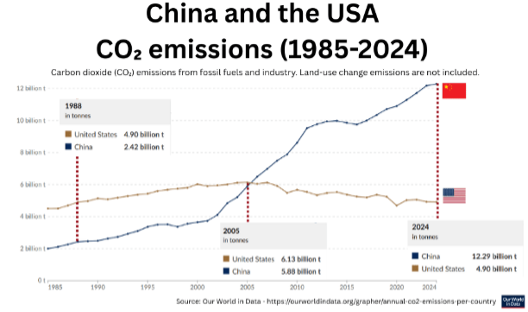
President Biden's Inflation Reduction Act (IRA) unleashed more than a trillion dollars in green corporate welfare (Saul, 2023) that, in combination with other Biden-era rules, attempted to force Americans out of the internal combustion engine cars they want to buy, reduced employment of American workers (Sherk & Sagert, 2023), and resulted in significantly greater imports of Chinese manufactured EVs that recently declining sales numbers indicate Americans do not want, and for good reason. It disrupted our electricity grid by prioritizing high-cost intermittent energy sources over low-cost, reliable ones. It borrowed hundreds of billions of dollars to subsidize American firms removing atmospheric CO₂ through carbon capture, while China remained the world's largest emitter and source of those emissions. This is all while China produces more than twice the carbon emissions of the United States (as shown in Figure 1) and approves two new coal-fired power plants every week (Davidson, 2023) with no plan to reduce their emissions until 2030, at the earliest.
The Biden Administration's approach made it more expensive to manufacture here in the United States, made us more reliant on energy and critical minerals from potential adversaries, and worsened our nation's financial position by paying companies to engage in activities that generate no product enhancements, health benefits, or environmental improvements.
Figure 1
China and the USA CO₂ Emissions
Note. From Ritchie, H., Rosado, P., & Roser, M. (2023). Annual CO₂ emissions. Our World in Data. https://ourworldindata.org/grapher/annual-co2-emissions-per-country
America First policies involve opening up vast expanses of federal land to energy extraction, mining of our own critical minerals, and construction of the infrastructure needed to upgrade our energy system. Our nation is blessed with extraordinary quantities of the resources necessary to power our economy, produce the technology the American people rely upon, and protect our nation. In addition to oil and natural gas, our country has millions of tons of deposits of such critical minerals as copper, cobalt, and rare earth elements that go into electrical wiring, batteries, and Pentagon weapons systems. To more inexpensively provide these necessary inputs, an America First administration must continue doing everything it can administratively to hasten the permitting process for accessing these deposits, make available more land for leases that allow for exploration and extraction, and remove the regulatory barriers that often lead to a decade-long process for gaining access to these critical components. Gone must be the days when we are reliant on unfriendly nations that are more than happy to lay claim to our wealth by providing these inputs, all because a vocal contingent of the American far-Left opposes growth.
Also central to improving energy affordability and reliability is to embrace the nuclear energy advancements of the last couple of decades (America First Policy Institute, 2023). Through innovation, in many cases led by researchers here in the United States, nuclear energy production is now smaller and safer than the reactors currently in operation. Nuclear power provides base energy, meaning that its output is constant and predictable, irrespective of whether the sun is shining or the wind is blowing. With the reductions in size and the modularization of nuclear technologies that are taking place, we can locate these reactors closer to population centers and data centers, which will reduce the cost of building new transmission and the potential for "line loss" from having generation facilities far away from end users. The mission of the Nuclear Regulatory Commission must be redrafted to emphasize the expansion of this clean, efficient, and effective source of energy rather than being an agency that stands in the way of again realizing American energy dominance.
The second Trump Administration has made significant advances in the policies outlined above. On Day 1, the administration paused the disbursement of all funds allocated through the IRA (The White House, 2025b), requiring agency audits of each program to ensure they were consistent with an energy policy strategy that encouraged greater domestic production and promoted consumer choice. The Working Families Tax Cuts (WFTC) Act, signed into law in July 2025, produced the biggest rollback of IRA policies (Pyle, 2025), eliminating onerous emissions requirements, terminating the EV tax credit, and accelerating a phaseout of wind and solar subsidies. As of January 2026, President Trump's Department of the Interior had approved 63.7% more federal and Indian drilling permits compared to the Biden Administration at the same point in their presidencies (Bureau of Land Management, 2026).
Support for an all-of-the-above energy dominance strategy is consistent with environmental conservation. Between 1970 and 2025, according to data monitored by the Environmental Protection Agency, our economy more than tripled in size, our population grew 66%, and our energy consumption went up 43%. Even with that growth, pollution dropped 79%, and our carbon dioxide emissions peaked in 2007 (EPA, n.d.). History shows that wealthier countries are better stewards of our environment because they have the resources to meet the basic needs of their population, such that they can afford to implement more environmentally friendly practices. An America First energy strategy will simultaneously grow our economy, improve our national security, bring down prices, and enable a cleaner environment.
Deregulation: Lift the Burden of Heavy-Handed Government Interference
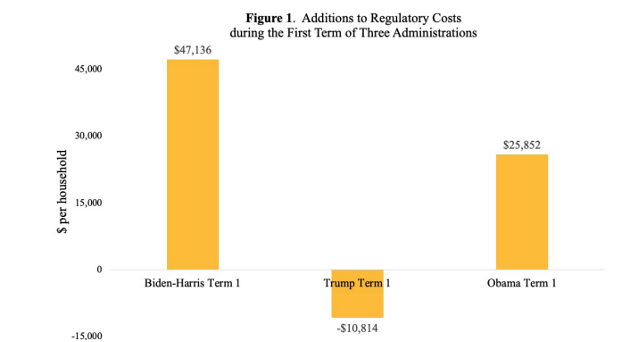
Energy is not the only part of our economy struggling under heavy-handed regulations that the Biden Administration doubled down on. According to a study by the Committee to Unleash Prosperity, the Biden Administration added about $47,000 in regulatory costs throughout his term (Mulligan, 2024) per household—rules touching every aspect of American life—rapidly outpacing even the Obama Administration's heavy-handedness (see Figure 2 for a comparison). These regulations act as a hidden tax on the American people that reduces prosperity, inhibits innovation, and limits freedom.
By contrast, America First policies are rooted in the understanding that the private sector is the source of economic dynamism, not government. Ours is the most diverse country on the planet, and meeting the wide-ranging needs of our people requires a flexible approach that empowers individuals, small businesses, and local communities to identify needs and respond to them in innovative ways by creating affordable abundance—not the bureaucratic, slow-moving, one-size-fits-all approach that has failed countless times in the past. Reversing the regulatory onslaught is both necessary and feasible. After all, the first Trump Administration did not merely stem the growth of regulations. It actually cut regulatory costs by almost $11,000 per household. Further, the White House Office of Information and Regulatory Affairs (OIRA) estimates that in the first year of the second Trump Administration, it created nearly $211.8 billion in net cost savings from cutting regulations, which equates to nearly $600 per American (The White House, 2025k).
Figure 2
Additions to Regulatory Costs Per Year of Rulemaking
Note. From Mulligan, C. B. (2024). Biden–Harris regulations cost the average family almost $50,000. Committee to Unleash Prosperity. https://committeetounleashprosperity.com/wp-content/uploads/2024/07/240724_CTUP_BidenHarrisRegulations_Doc.pdf
The primary means of facilitating private suppliers in bringing more affordable options to the American people is to free them from government interference that forces them to divert time and resources to navigating red tape and jumping bureaucratic hurdles instead of producing and innovating. The first Trump Administration set a target of repealing two rules for every new one imposed—a goal it eclipsed by achieving a nearly eight-for-one ratio (The White House Archives, 2020), and the second Trump Administration set a target of repealing 10 rules for every one imposed (The White House, 2025d), which has been a success through the first year of the administration. Even if a rule is justifiable when initially crafted, the changing nature of our economy necessitates a periodic review of all rules to determine which to keep, which to reform, and which to eliminate. The Trump Administration and state governors should continue adhering to the principled goal of reviewing and removing outdated, cumbersome requirements that merely escalate compliance costs and do nothing to improve the safety, quality, or enjoyment of Americans' lives. Results are what matter, not intentions. Given the rapid proliferation of federal rules under the Biden Administration, eliminating two regulations for every one new regulation should be the minimum target.
Perhaps no area of the American Dream was pushed out of reach more by the Biden Administration's regulatory burdens than that of homeownership. House prices surged over 30% during the Biden Administration (S&P Dow Jones Indices LLC, n.d.)—with the price of a typical home ending well above $400,000 (U.S. Census Bureau & U.S. Department of Housing and Urban Development [HUD], 2026)—but by far the biggest dent to affordability came from the historic doubling of mortgage rates (Freddie Mac, 1971). Because of these two forces, the housing affordability index reached a historic low in late 2023 (Evangelou, 2024), and the monthly principal and interest payment on a mortgage for the typical American home had risen by about $1,500—all at a time when inflation-adjusted incomes had fallen (U.S. Census Bureau, 2025). The jump in mortgage rates was no mere happenstance. It is a direct consequence of the inflation episode that has been fueled by the reckless spending throughout all four years, beginning with the American Rescue Plan Act in early 2021 and exacerbated by the misleadingly titled Inflation Reduction Act. For Americans shut out from homeownership, the rental market has given no reprieve, with rent inflation for new tenants reaching double digits in 2023 (O’Trakoun, 2024).
Unfortunately, the Biden Administration's response to the deterioration in housing affordability was to double down on regulations and inflationary subsidies. While the progressive Left makes some gestures about the need for more housing supply, it simultaneously erects barriers to achieving such goals by injecting its DEI and climate agenda into housing development. For example, the Biden Administration repealed the first Trump Administration's Executive Order titled "Preserving Community and Neighborhood Choice" (HUD, 2020) and replaced it with the "Affirmatively Furthering Fair Housing" (AFFH) rule that builds upon the failed approach of the Obama Administration (HUD, 2023). Communities had to submit "equity plans" to comply with AFFH rules for receiving federal funding. The Biden Administration also reimposed the Obama Administration's "disparate impact" rule, which effectively applies an equality-of-outcomes standard for anti-discrimination compliance. Beyond adding costs, this standard departs from the plain language of the Fair Housing Act and usurps Congress’s policymaking power. The Trump Administration reversed both policies. HUD terminated the Biden-era AFFH rule in March 2025 (HUD, 2025), replacing its onerous equity plan requirements with a simple self-certification that restores zoning and land-use decisions to local governments. Furthermore, the President issued an executive order in April 2025 directing all federal agencies to eliminate regulations relying on the disparate impact standard (The White House, 2025f).
In keeping with its equity focus, the Biden Administration also raised mortgage fees in 2023 on borrowers with sound credit to subsidize the fees of borrowers with poorer credit. A coalition of more than 30 state auditors and treasurers wrote a letter to the Federal Housing Finance Agency expressing deep concern that the fee changes would penalize people who worked hard to build their credit while creating backward incentives that could undermine the financial health of the country and the performance of the housing market (Sorrell et al., 2023).
Despite regulation already comprising nearly a third of the cost of an average multifamily home (Emrath & Walter, 2018) and nearly a quarter of the cost of an average single-family home (National Association of Home Builders, 2021), the Biden Administration prioritized its climate alarmism over affordability. An America First economic plan must prioritize building codes that deliver safety and affordability, rather than imposing its green agenda that significantly adds to construction costs. Federal programs that provide financing assistance must be free of discrimination and should reward personal responsibility while avoiding the mistakes that led to the financial crisis.
The second Trump Administration inherited a struggling housing market, marked by poor Biden-era policy and Federal Reserve mishaps. Throughout the remainder of the second term, the Trump Administration can target several issues to alleviate the remaining problems, particularly the persistently high home prices. Excessive local regulations are a primary driver of the housing affordability crisis. The federal government cannot directly mandate local reform, but HUD can leverage Fair Housing Act authority under 42 U.S.C. §3608 by prioritizing block grants to condition federal benefits on localities streamlining permitting, rolling back excessive environmental mandates, and abolishing artificial price-setting like rent control and inclusionary zoning (Faulkender et al., 2026). Congress can codify many of these recommendations, and Senator Bill Hagerty's Freedom to Build Act (S. 4265, 2025) applies the same principles, directing HUD to establish a voluntary designation that gives qualifying localities priority for existing competitive housing grants. Localities can earn the designation either by adopting reforms across three categories (modernizing construction codes, fast-tracking approvals, and defending property rights) or by hitting a housing supply growth target.
Besides deregulation, as it pertains to housing costs, the other area at the top of the list should be onerous rules that restrict the freedom of American workers. With innovations in technology and telecommunications, and now the rapid advancements of artificial intelligence (AI), many Americans have become independent contractors who engage in on-the-spot work in what has come to be called the "gig economy." Whether that is providing ride-sharing or delivery services, doing home improvement projects, or simply being a white-collar freelance worker, there is no reason for the federal government to make it more difficult for workers and clients to pursue the arrangements that work best for them. Yet, Julie Su, who served as Acting Labor Secretary of the Biden Administration, an individual known for overseeing massive amounts of unemployment insurance fraud during the pandemic in California, pushed through regulations designed to prevent workers from working for themselves. She finalized a rule that reclassified many of those workers from independent contractors to employees, which will instead put many of them out of work by regulating these jobs out of existence (U.S. Department of Labor, 2024a). In early 2026, the Trump Administration took action through a proposed rule that would rescind and replace the onerous six-factor totality-of-the-circumstances test from the 2024 rule, for a two "core factor(s)" analysis that will make it easier for entrepreneurs to structure independent working relationships without fear of misclassification liability (U.S. Department of Labor, 2026).
Likewise, the Biden Administration promulgated a final rule that eliminated the overtime exemption for salaried employees making less than $43,888 starting July 1, 2024, and then to $58,656 on January 1, 2025 (U.S. Department of Labor, 2024b). This effectively converted millions of salaried workers into hourly employees, forcing them to track their hours and adding significant bureaucratic expense for America's small businesses. This was eventually struck down by a federal judge in Texas, providing much-needed relief for the workers that would have been saddled with even more burdensome compliance regulations, in a dire economic state (Society for Human Resource Management, 2024). An America First approach reduces bureaucracy at both the federal and state levels, empowering workers and businesses to generate the arrangements that work best for them.
Another set of regulations that were imposed on Americans was the Corporate Average Fuel Efficiency (CAFE) standards set by the National Highway Traffic Safety Administration (NHTSA) and the EPA's tailpipe emissions rule in 2024 (Wall Street Journal, 2024). As noted by the Council of Economic Advisers (CEA) in the 2019 Economic Report of the President (2019), CAFE reduces consumer choices and imposes significantly higher costs on the purchase of new vehicles by requiring features that consumers don't want. Since fuel savings from those features accrue only over miles driven, consumers who don’t drive often never recover the added purchase price through lower fuel costs. They are effectively forced to pay upfront for efficiency gains they will not realize. The Trump Administration moved swiftly on CAFE, zeroing out civil penalties for noncompliance in the WFTC along with proposing a reset for fuel economy standards from Biden's 50.4 mpg target to 34.5 mpg by model year 2031. Together, these actions are projected to save American families over $100 billion over 5 years and reduce the average costs of a new vehicle by roughly $930 (The White House, 2025h). America First principles recognize that people should have the freedom to select the car that works best for them rather than forcing people to purchase vehicles that don't meet their needs. CAFE is a prime example of the kind of regulatory overreach that has persisted for decades across the federal government — rules that limit consumer choice, raise costs, and substitute bureaucratic judgment for individual decision-making. The second Trump Administration must continue identifying and reversing onerous regulations that take freedom from the American people.
Finally, another key dimension of the economy where excessive regulations harm production levels and growth is in the manufacturing sector. In addition to national security reasons, a robust manufacturing sector is vital economically for many reasons: one, it has an outsized impact on research and innovation — approximately two-thirds of US patenting and corporate R&D spending flow from manufacturing (Autor et al., 2020); second, manufacturing is often the best opportunity for people of varying backgrounds to obtain well-paying and stable jobs (Carnevale et al., 2019). Work, in place of dependence on government benefits, promotes broader dignity and well-being for citizens due to the social value of work. Yet a major source of that work has eroded: the total number of employees in the manufacturing sector has declined 35-40% from its peak decades earlier (BLS, 2026a), and manufacturing labor productivity from 2007 to 2019 was stagnant (Redmond, 2026).
A key driver of this decline was the lack of construction of new facilities; total construction spending on manufacturing was flat for the first two decades of the 21st century (BLS, 2026e). As is the case with housing, burdensome regulations add massive costs and uncertainty to new construction, disincentivizing the needed investment to boost production. A prime example of a regulatory statute that stifles construction is the National Environmental Policy Act (NEPA). NEPA requires federal agencies to review the environmental consequences of projects involving the federal government. In practice, the statute results in significant delays due to multi-year reviews involving environmental impact statements and lawsuits. The second Trump Administration has implemented substantive reforms on NEPA's deregulatory framework by rescinding broad government-wide regulations issued by the Council on Environmental Quality (CEQ) and consolidating NEPA regulations at the agency level. Further reforms should involve significantly narrowing the scope of activities that trigger NEPA review, ending overlaps with other regulatory statutes, and setting strict time limits for Environmental Impact Statements.
Slash Inflationary Federal Spending
The underlying cause of the 40-year high inflation in 2022 was the massive amount of excess government spending used to "stimulate" the economy well after it had largely bounced back from the pandemic. Although the federal fiscal deficit was quite large in 2020, economic conditions were very different. In spring 2020, the COVID-19 pandemic arrived on U.S. shores, and America's economic output suffered a severe contraction in response to early lockdowns in the face of an unknown virus.
The first Trump Administration, recognizing that households and businesses would need a temporary financial lifeline to get through that period, negotiated with Congress to craft and pass the Coronavirus Aid, Relief, and Economic Security (CARES) Act, which provided historic fiscal support to keep Americans on the payroll, preserve household and business financial solvency, and put the economy on a more resilient footing to make a rapid recovery. Importantly, CARES Act programs were time-limited to not delay the return to work and economic normalcy. The approach worked, as the economy experienced a record rebound in the third and fourth quarters of 2020 while inflation remained under 2% (CBO, 2024).
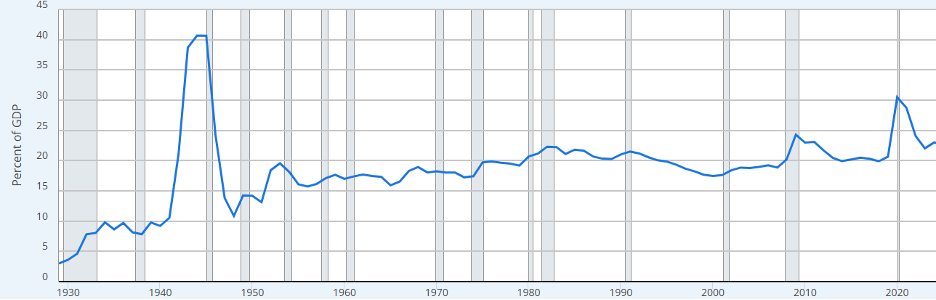
By 2021, the federal government should have returned spending to pre-COVID levels—which had averaged 20% of national output in the fifty-year period from 1968 to 2019, as shown in Figure 3 (U.S. Office of Management and Budget [OMB], 2026a)—but instead, the opposite occurred. The Biden Administration injected trillions more into the economy through the American Rescue Plan Act, which disincentivized work through policies like extended unemployment benefits. When inflation exploded in 2021, the path of excess spending continued with the deceptively named Inflation Reduction Act, achieving the opposite effect than its name would suggest.
The math is clear. After averaging 20.3% of output in the three years immediately prior to the pandemic, federal spending as a share of the economy throughout the Biden Administration was 28.7%, 24.1%, 22.0%, and 23.0%, respectively (OMB, 2026a). These figures were some of the highest on record, surpassed only by the emergency years of 2009 (financial crisis) and 2020 (onset of the pandemic). While a national emergency may necessitate significant, temporary, elevated spending, such deficit-causing high spending in times of economic growth and full employment will necessarily be inflationary. The biggest driver of these high spending levels is mandatory spending, spending that is required by existing laws, which represents two-thirds of total spending (U.S. Treasury FiscalData, n.d.); the bulk of this spending category is made up of entitlement programs, most notably Social Security and Medicare.
Figure 3
Federal Net Outlays as Percent of Gross Domestic Product
Note. From U.S. Office of Management and Budget. (2026a, April 30). Federal net outlays as percent of gross domestic product. FRED, Federal Reserve Bank of St. Louis. https://fred.stlouisfed.org/series/FYONGDA188S
The Biden Administration assumed that the post-COVID expansion government would be permanent. In January 2025, the Congressional Budget Office (CBO) released its ten-year Budget and Economic Outlook (CBO, 2025a). It forecasted that spending for the next ten years will continue to be in the 23% to 24% of GDP range. The result is that each of the next ten years, budget deficits are forecast to exceed $1.9 trillion, slightly over 6% of annual national output.
Looking even further into the future, the CBO's most recently released long-term budget outlook has outlays rising to an astounding 27.9% by 2056 (CBO, 2026). For perspective, financing that magnitude of expenditure without deficits would require an across-the-board doubling of income taxes as a share of the economy from where they are currently.
While an educated workforce is necessary to meet the needs of our nation and keep America globally competitive, neither students nor taxpayers benefit from the proliferation of frivolous degrees and higher tuition. The cost of college has now increased by nearly 37% since 2010 (Hanson, 2025), and while all of Gen-Z may not have felt the effects of the constantly rising tuition, they already have amassed an average debt profile of approximately $94,000 (Gibbs, 2026). While the Biden Administration tried to impose student loan forgiveness, which ultimately was struck down, the reality is that higher education institutions that do not prepare students for higher-wage jobs should take on the burden before spending taxpayer money from people who never even went to college.
A signature initiative of the second Trump Administration has been cutting wasteful spending, led by the Department of Government Efficiency (DOGE). Established via executive order on day one (The White House, 2025a), DOGE has worked to identify and eliminate waste, fraud, and abuse inside the federal government. Through terminating wasteful government contracts, grants, and leases, notably those which promoted DEI, DOGE has managed to net over $100 billion in savings alone. Concurrently, DOGE has attempted to enhance government workforce productivity by bringing modern IT architecture to the federal government and effectuating the largest reduction of the federal workforce in the past two decades. DOGE continues working to modernize federal technology and software to maximize productivity and deliver services more efficiently and securely, upgrading systems such as the IRS IT modernization, which is 35 years behind schedule, and federal recruitment and digital healthcare services, which further increase savings (Murphy, 2025). The result has been more than 300,000 departures in the first year of the new administration (Ramirez, 2026). Together, DOGE estimates its total savings so far to be $215 billion (DOGE, n.d.). Another element of the federal government that contributed to wasteful spending was remote work. While some jobs can productively be done from home, evidence from COVID-induced work-from-home regimes suggests that productivity may be 20% lower, even among IT workers for whom telework may have the greatest potential (Gibbs et al., 2021). Following President Trump's return-to-office (RTO) mandate, the number of federal workers showing up to the office rose to nearly 90%, considering the workers who were granted exceptions (Kupor, 2026). While this will certainly help with productivity, the federal government still spends $2 billion a year to operate and maintain federal office buildings regardless of the buildings' utilization, and agencies spend about $5 billion annually to lease office buildings (U.S. Government Accountability Office, 2023). At current maintenance funding levels, the Public Buildings Reform Board estimates the federal building portfolio would need to shrink by 80% just to meet industry standards (Public Buildings Reform Board, 2026).
The pandemic demonstrated the enormous inefficiency of federal spending. Rampant fraud in the unemployment insurance system and the Small Business Administration's Economic Injury Disaster Loan (EIDL) program went unchecked, and a myriad of studies exist documenting the fraud in Medicare, Medicaid, housing assistance, and income-based payment plans for student loans. The federal government has hundreds of one-size-fits-all programs with poor risk controls that create temptation for those willing to cheat and steal from their fellow Americans. The GAO reported the federal government loses between $233 billion and $521 billion annually to fraud (GAO, 2025), with government benefits fraud offenses increasing over 240% since 2020 (U.S. Sentencing Commission, 2017). While we are a generous nation, an America First economic plan calls for consolidation of overlapping programs, raising verification requirements, and increasing penalties for fraud. In the WFTC signed by President Trump in 2025, Congress raised eligibility requirements in Medicaid by eliminating eligibility for illegal immigrants and requiring 80 hours per month of work for prime-age adults without child dependents. These eligibility measures should be extended to other social service programs and will help our nation save billions of dollars annually.
Spending restraint can also create a virtuous cycle. After all, the fastest-growing expense of the federal government is debt service costs. In fiscal year 2020, the federal government spent $345 billion on interest on the national debt; three years later, in fiscal year 2023, the federal government spent $659 billion (Committee for a Responsible Federal Budget, 2024), and in 2025, interest on the debt rose to $1.2 trillion (GAO, 2026). The continued growth in the debt and its service costs has the potential to create a bond market failure that would crush our economy and rupture our society. By undoing the reckless post-COVID expansion in government, deficits fall, taking pressure off interest rates and debt servicing costs, which will inevitably ease pressure on the growing deficit.
Advance Pro-growth Tax Reform to Help Struggling and Striving Americans
Government taxes are one of the costliest items affecting family budgets, given how large of a chunk they take out of people's monthly paychecks. At the center of President Trump’s economic plan upon re-entering office was preventing tax hikes and making taxes simpler, lower, and fairer. But first, it is important to establish that America does not have a revenue problem; it has a spending problem. In fiscal year 2022, federal receipts as a percentage of national output reached the second-highest since World War II (OMB, 2026b).
Despite the Left's class warfare rhetoric, reductions in marginal tax rates have not deprived the government of adequate revenue or delivered windfall gains to the rich. In fact, the top 1% of taxpayers pay nearly double the share in federal income taxes (38%) than their contribution to aggregate income (21%) (York, 2024). While one may think that the higher tax rates demanded by the progressive Left would generate greater tax receipts for the government, the Laffer Curve explains that higher rates deter economic activity, so a higher tax rate is paid on less income, potentially resulting in less income for the government, not more. Less economic activity and the same or lower revenue to the government will not solve our budget, inflation, or growth challenges.
Tax reform that is pro-growth is also pro-worker. In the years immediately following the Trump Administration's enactment of the 2017 Tax Cuts and Jobs Act (TCJA), wage growth was faster among workers with lower incomes and those with less than a college degree than among college graduates and those with the highest incomes (CEA, 2021). Overall, inflation-adjusted income for the typical American family rose by 10% between 2016 and 2019, with incomes jumping a record $4,400 in 2019 alone (CEA, 2021). Contrast that with greater government spending, regulation, and consistent threats of higher taxation from the Biden Administration, which resulted in inflation-adjusted household incomes rising just 3% between 2021 and 2024 (U.S. Census Bureau, 2025).
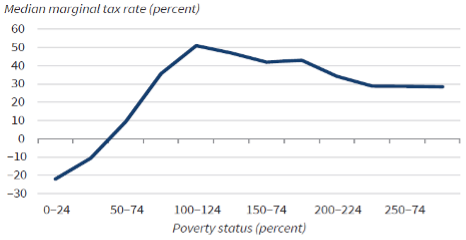
To realize affordable abundance while making our debt burden manageable, we must implement policies that return to higher economic growth rates. During the period 1950 to 2000, GDP, after being adjusted for inflation, rose an average of 3.7% per year. In the years since 2000, that average growth rate has fallen to just 2.1% (BEA, 2026a). While some of this decline is coming from the fact that our aging population results in lower rates of labor force growth, another part arises from a federal tax and transfer system that undermines America's global competitiveness and actively penalizes aspirational workers looking to climb the economic ladder (indicated by the high marginal effective tax rate faced by low earners in Figure 4). A datapoint demonstrating this phenomenon is that the labor force participation rate is more than 5 percentage points below its peak in the year 2000 (BLS, 2026d).
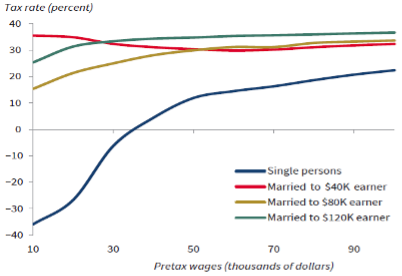
While the prime-working age labor force participation rate has held steady at around 77% for women (Organization for Economic Co-operation and Development, 2025a), it has dropped precipitously for men from 97% in 1960 to only 89% today (Organization for Economic Co-operation and Development, 2025b). Among opposite-sex married couples, 54.0% of households had earnings from both the husband and wife in 2019, down from 60.4% in 1996 (BLS, 2022b)—at least partly in response to the high tax penalties that second earners face (shown in Figure 5). America First economic policies should encourage labor force growth by keeping marginal tax rates low, ending marriage penalties that punish couples for getting married, and eliminating collectivist programs that lock people into government dependency.
Figure 4
Marginal Effective Tax Rate on Low Earners
Note. From Council of Economic Advisers. (2021, January). Economic report of the president. U.S. Government Publishing Office. https://www.govinfo.gov/content/pkg/ERP-2021/pdf/ERP-2021.pdf
Figure 5
Average Tax Rate on the Pretax Wages of Single Persons and Second Earner
Note. From Council of Economic Advisers. (2021, January). Economic report of the president. U.S. Government Publishing Office. https://www.govinfo.gov/content/pkg/ERP-2021/pdf/ERP-2021.pdf
Making taxes simpler, lower, and fairer benefits Americans directly by taking a smaller bite out of people's hard-earned paychecks, but that is just the beginning. Its true power comes from enhancing and unleashing the economic potential of the country by drawing workers and private investment off the sidelines, just as it did in response to the enactment of TCJA.
America First tax reform implemented in the Working Families Tax Cuts makes taxes simpler, lower, and fairer, and has the power to alleviate the cost-of-living crisis, resolve labor shortages, and bring transformative projects to capital-deprived communities. The WFTC fulfilled a critical piece of this America First tax reform agenda by making the TCJA tax cuts, which were set to expire in 2025, permanent. Among these permanent benefits were the lower individual income tax rates, the larger standard deduction, and immediate expensing for R&D and qualified property.
The WFTC further delivered significant tax relief to Americans beyond the foundation of the extended TCJA rates, creating new income tax deductions on tips, overtime income, senior income, and auto-loan interest. The law also notably allowed Americans to invest more in their child's future by creating tax-advantaged savings accounts for newborns, called "Trump Accounts." As a result of these reforms, the average refund as of March 2026 was almost 11% higher than in 2025 (Timmons, 2026). The WFTC is a premier example of an America First tax reform that increases take-home pay for Americans, incentivizes work and investment, boosts purchasing power, and stimulates growth.
Finally, Americans spending time filling out tax forms does not improve prosperity and quality of life. For that reason, making the provisions in the WFTC permanent, particularly the doubling of the standard deduction from TCJA, means that fewer than 10% of households itemize their expenses, saving time and record-keeping compliance costs. Currently, Americans spend an estimated between $67 billion and $378 billion in accounting costs per year, and 6 billion total hours in complying with the tax code (Fichtner & Feldman, 2013). The burden of compliance with IRS regulations causes economic losses of another $148 billion to $609 billion annually.
In this way, tax simplification is deregulation (Hodge, 2022). We must go even further by continuing to eliminate special interest deductions, like the state and local tax (SALT) deduction.
Reducing taxes for struggling and striving middle-class Americans is also critical to countering the cost-of-living crisis and the penalties the tax code inflicts on them for trying to climb the economic ladder. Americans also need protection from the demands of progressives to increase taxes even further. The Left has devalued fairness to mean equity and equality of outcomes, choosing grievance and zero-sum thinking over mutually uplifting value creation. The widely shared growth from TCJA is a testament to the enduring promise that equality of opportunity is the best engine of prosperity. An essential element of realizing American Greatness is making sure that our tax code retains pro-growth incentives.
Ensure Sound Money and Sound Financial Institutions
The Federal Reserve is responsible for four major things: price stability, strong employment, bank holding company supervision, and monetizing seigniorage. As stipulated in the Federal Reserve Act, monetary policy is the jurisdiction of the Federal Reserve "so as to promote effectively the goals of maximum employment, stable prices, and moderate long-term interest rates" (1913). In Dodd-Frank, the Federal Reserve was also given supervisory responsibility for large banks, and historically, the Federal Reserve's conduct of monetary policy has resulted in paying a sizable dividend to the Treasury from being the monopoly provider of money in the United States, an action called seigniorage. In 2020, that amount totaled $81.9 billion.
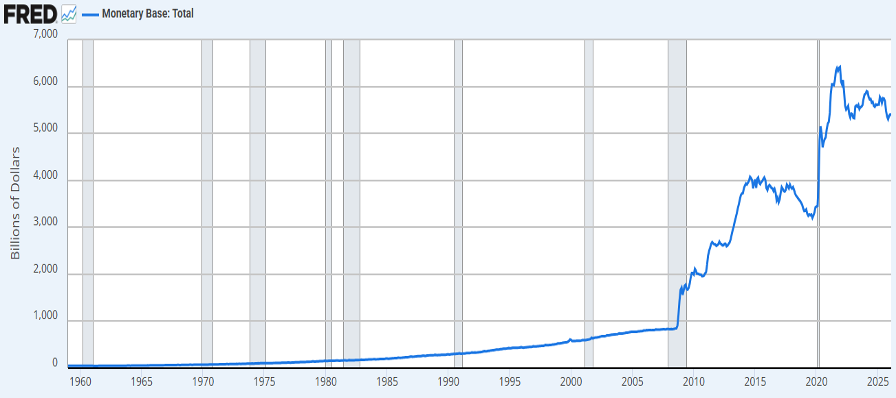
The performance of the Federal Reserve in the past five years has been rather dismal. Inflation reached a 40-year high of 9% in 2022, well above the 2% target (BLS, 2022a). The Fed facilitated out-of-control government spending by greatly increasing the monetary base (see Figure 6) (Board of Governors of the Federal Reserve System, 2026), continuing well after the economy emerged from the depths of the pandemic, and by waiting to start raising interest rates until after inflation exceeded 8% (BLS, 2026b). Three of the four largest bank failures in US history occurred in 2023. Also, after remitting $109 billion to the Treasury in 2021 and $76 billion in 2022, the Fed suspended most remittances in September 2022 and has accumulated a deferred asset that grew to $243 billion by the third quarter of 2025. The May 2025 CBO forecast does not expect them to significantly return until 2030 (CBO, 2025b). On three of its four responsibilities, the Federal Reserve has unquestionably failed.
Figure 6
The U.S. Monetary Base
Note. From Board of Governors of the Federal Reserve System. (2026, April 28). Monetary base: total. FRED, Federal Reserve Bank of St. Louis. https://fred.stlouisfed.org/series/BOGMBASE
However, something that an America First administration can focus on is reorienting bank supervision back to "safety and soundness" (Board of Governors of the Federal Reserve System, n.d.-b). To prevent past failures from becoming future failures, policymakers should consider a commission to scrutinize these policies. The commission can be composed of economists and policy experts alongside senior administration officials or members of Congress, evaluating the Fed's past conduct of monetary policy, institutional governance, and scope of activities. The commission can also issue recommendations regarding the Fed's statutory mandate and criteria for future nominees to the Board of Governors.
For decades, the focus of regulators and bank examiners has been on implementing and ensuring compliance with rules that make individual banks and the overall financial system accessible and well-capitalized. However, the focus of the Biden Administration on climate and equity distracted it from these historical norms. This can best be demonstrated by the topics that are discussed at the regular meetings of the Financial Stability Oversight Council (U.S. Department of the Treasury, 2024). Examining the minutes of these meetings prior to the major bank failures, one can see that the topic of climate was discussed at nearly every meeting, yet inflation and the rising interest rate environment were largely ignored.
At a time when the nation was facing a 40-year high in inflation, which would require a significant change in the nation's interest rate environment, our financial regulators were instead distracted by how they could use bank capital regulation to impose a radical climate agenda.
Also entangled in the banking system is the sharp rise of "debanking" that occurred under the Biden Administration. Debanking is the process by which a federal regulator advances a political agenda by pressuring financial institutions to restrict or modify a customer's access to banking services based on political or religious beliefs. This issue became especially prevalent when findings from the Operation Choke Point 2.0 investigation became public, and President Trump noted he had been debanked. The main issue stemmed from banking regulators' use of reputation risk, which is a rather opaque and arbitrary metric used to justify debanking. The Trump Administration sought to eliminate this through an Executive Order entitled, "Guaranteeing Fair Banking For All Americans" (The White House, 2025g), and in early April 2026, the OCC and FDIC issued a final rule to eliminate reputation risk (Office of the Comptroller of the Currency, 2026). However, to ensure that political beliefs are never used as a tool to deny lawful Americans access to banking services, these rules should be codified by Congress.
Another distraction has been the move towards creating a Central Bank Digital Currency (CBDC). As AFPI outlined in a report, this initiative by the Federal Reserve poses a threat to the American people due to "the extraordinary economic control, discrimination, and threats to data privacy" that it would enable (Faulkender & Vasquez, 2023). While innovation in the nation's payment system is essential and the U.S. continues to lead the world in the liquidity and efficiency of our financial markets, a CBDC represents greater government interference in our lives and threatens American prosperity. The second Trump Administration issued an Executive Order prohibiting federal agencies from establishing or promoting a CBDC (The White House, 2025c), and the House passed the Anti-CBDC Surveillance State Act to codify this ban (Emmer, 2025). The Senate must act.
Moreover, to ensure the United States has the most secure and robust capital markets in the world, proxy advisory firms must be stifled. Proxy firms are third-party entities that provide research, analysis, and voting recommendations primarily to institutional investors on corporate governance matters, such as executive pay. The proxy advisory industry consists of a foreign-owned duopoly—ISS and Glass Lewis—which controls 97% of the market (U.S. House Committee on Financial Services, 2025), shaping how trillions in American retirement savings are managed, and whose recommendations can swing shareholder votes by as much as 30% (Brannon, 2022). Current practices allow both firms to insert their politically motivated agendas into corporate governance matters, launder nonpecuniary ESG principles into voting policies, and hinder market performance—with 91% of businesses agreeing their proposals are "more focused on advancing the particular interests of the proponent than increasing overall value of the company" (Gambetta, 2025). The second Trump Administration issued an executive order titled "Protecting American Investors from Foreign-Owned and Politically-Motivated Proxy Advisors" (The White House, 2025i). However, a further multifaceted approach is needed: FTC antitrust review, closing regulatory gaps by bringing Glass Lewis under the Investment Advisers Act alongside ISS, eliminating structural conflicts of interest that disclosure alone cannot remedy, addressing foreign ownership through IEEPA-authorized divestiture, and codifying pecuniary-only standards under ERISA.
Finally, to ensure the United States is the home for the free flow of digital assets and counter foreign influence and theft of American intellectual property, stopping the flow of money from adversarial foreign countries into America, the Trump Administration ushered in a new regulatory regime through the signing of the Guiding and Establishing National Innovation for U.S. Stablecoins (GENIUS) Act passed by Congress (S. 1582, 2025). The GENIUS Act lays out a framework that includes the first federal regulatory framework for payment stablecoins, requires one-to-one high-quality reserves, and prohibits paying interest on stablecoins to ensure they fulfill their function as payment instruments, not as securities. Building on this, the Digital Asset Market Clarity (CLARITY) Act (H.R. 3633, 2025), currently under consideration in the Senate, will split crypto regulation between the SEC and CFTC, giving the CFTC jurisdiction over tokens on mature blockchain systems as digital commodities. At the same time, the SEC retains authority over primary market fundraising and investment contract assets. It also establishes registration, custody, and disclosure rules for exchanges, brokers, and dealers, to ensure that America remains well-positioned as the global hub for innovation and an even stronger capital market. For the United States to maintain its role as the leading financial innovator and home to the largest financial markets in the world, the Senate must act on the CLARITY Act.
Reciprocal Trade
Non-reciprocity and unfair trade practices have long defined the global trade paradigm, harming American workers and industry. The post-World War II trading system was built on core pillars of non-discrimination, most notably the Most Favored Nation (MFN) principle, which requires countries to afford trade benefits to one country as advantageous as those given to any other country. However, the system over time morphed into a global regime rife with abuse, non-compliance with key obligations, and insensitivity to legitimate national security concerns.
Perhaps no American trade relationship is more emblematic of the fundamental flaws of the global trade system than the one with our main strategic adversary, China. China, through a mercantilist economy built to serve its ambitions of global hegemony, engages in intellectual property theft, forced technology transfers, state subsidies, labor repression, and currency manipulation that unfairly advantage its companies and violate global trade norms. However, the chief international trade organization, the World Trade Organization (WTO), has failed to enforce fair trading standards that members agreed to upon their entry. Between 2001 and 2018, the U.S.-China trading imbalance led to the loss of 3.7 million jobs (Scott & Mokhiber, 2020).
Making matters worse, China's growing manufacturing dominance means that many key American defense supply chains now depend on Chinese producers, creating massive national security vulnerabilities. In late 2023, for instance, the CEO of one of the largest U.S. defense contractors, RTX, said that it was impractical for the company to move supply chains out of China (Pfeifer, 2023). In 2024, an independent study found that over 40% of the U.S. military platforms use Chinese-made semiconductors (Tegler, 2024). While there may be gains from trade in some goods, there are also costs imposed on our national security that must be incorporated into how we manage trading relationships with potential adversaries. For too long, free trade orthodoxy has ignored these concerns on defense; America must have a sufficient stockpile of goods critical to economic and national security and secure supply chains if those goods are to be imported.
Many countries around the world, including American allies, have also engaged in non-reciprocal practices, which have contributed to the erosion of American industry. Part of the problem has been that countries in the past have set higher tariff rates on our exports into their countries than the tariffs we apply to our imports. For instance, Harley Davidson faced an 81% tariff on motorcycles that it sells to India, whereas Indian companies faced tariffs significantly lower than that when it sells in the United States (Business Today Desk, 2023). The European Union imposed a 10% tariff on U.S. cars, while the U.S. rate for EU cars was 2.5% (Winton, 2025). Brazil imposed an 18% tariff on U.S. ethanol compared to the 2.5% rate in return (Renewable Fuels Association, 2025).
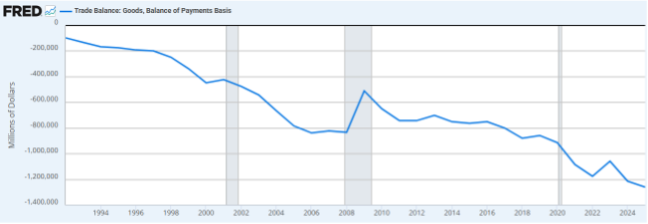
A more insidious driver of trading imbalances has been non-tariff barriers (U.S. Trade Representative, 2025a), such as import licenses, state subsidies, weak labor laws, environmental and health regulations not based on science, customs barriers, digital services taxation, etc. These barriers provide the nations that impose them an artificial competitive advantage, born not out of their superior products or inherent differences, but out of market-distorting policies. Failures across administrations in addressing non-reciprocal behavior and the violation of non-discriminatory principles have led to an extraordinary growth in trade deficits for the United States, especially since the formation of the WTO in 1995 and the accession of China into the organization in 2001. In 2024, the trade deficit eclipsed $1 trillion (BEA, 2026b), marking a 194% increase since 2001 (Figure 7).
Figure 7
Trade Balance: Goods, Balance of Payments Basis
Note. U.S. Bureau of Economic Analysis. (2026b, June 9). Trade balance: Goods, balance of payments basis. FRED, Federal Reserve Bank of St. Louis. https://fred.stlouisfed.org/series/BOPGTB#
American businesses and entrepreneurs are among the best in the world, and if other countries are going to use import tariffs and non-tariff barriers to restrict access to their market or to protect their industries from international competition, so should we. An America First approach to trade seeks reciprocity between the conditions our companies confront when selling abroad and what other countries' companies face when selling into our nation. Importantly, the income generated by these tariffs can be used to lower middle-class taxes while making supply chains more resilient.
The second Trump Administration precisely followed this America First Trade agenda. Notably, on April 2, 2025, commonly referred to as "Liberation Day", the Trump Administration imposed tariffs on virtually every American trade partner at a baseline rate of 10% (The White House, 2025e), and subsequently raised tariffs on China up to 125% (Bown, 2025). These tariffs were successfully used as a negotiating tool to sign trade agreements with over a dozen countries (Schlagenhauf et al., 2026), which pledged to eliminate their tariff and non-tariff barriers, purchase hundreds of billions of U.S. goods, and collectively invest over a trillion dollars into the United States in critical industries. Additionally, the tariffs raised $287 billion in 2025 (O’Trakoun, 2026), which set up a stable revenue source to cut taxes and pay down the debt. To make these updated trading arrangements permanent and change the economic incentives so that American manufacturers will rebuild domestic capacity, the administration should submit these agreements to Congress for ratification.
These policies follow the work of the first Trump Administration, which imposed tariffs on select goods and services under Section 301 of the Trade Act of 1974, which allows penalties against countries using unfair trade practices, and Section 232 of the Trade Expansion Act, which permits trade restrictions over national security concerns. This leverage brought the Chinese to the table to sign the Phase One trade deal, which would require them to make important structural changes in the areas of intellectual property, forced technology transfer, agriculture, services, and currency, despite the failure to make further progress due to the pandemic and the Biden administration's failure to enforce its provisions.
Moving forward, an America First administration must revisit which nations have been granted MFN trading status, particularly China. While legitimate arguments existed as to the potential geopolitical benefits of having granted that status to China two decades ago, the course of the relationship since then demonstrates that such a privilege is not currently warranted. Such changes could also occur as part of a broad reform proposal at the WTO, which would set a robust enforcement mechanism to suspend members' MFN privileges if they violate core global trading norms of non-discrimination, as China has done. Another solution may be a separate bloc of like-minded nations, either within or outside the WTO, which consists of countries that are committed to balanced trade, transparency, and non-discriminatory principles.
Healthy America
Essential to a prosperous America is the health of its people. Despite the United States being the world's leader in medical innovation, the fractured nature of healthcare delivery and the complexity of government mandates have resulted in limited choices, high costs, and ultimately, poor health for too many Americans. Obamacare contributed significantly to that complexity and placed bureaucracy at the center of healthcare decision-making, rather than the patient. Realizing affordability and access in healthcare means promoting individual control while protecting seniors and those with pre-existing conditions. To take back their health, as the Trump Administration has promoted, and to take control of their health, Americans need to take back control of their healthcare. An America First approach to healthcare empowers patients by increasing options, enhancing price transparency, modernizing options for seniors, and reducing the price of prescription drugs.
According to data from the BLS, prices for the average consumer good or service (cumulative inflation) increased by 93% (BLS, n.d.) between January 2000 and December 2025. Within categories of spending, two of the areas where prices rose the fastest are payments for medical services, which rose 147%, while the cost of hospital services rose 281%. As shown in Figure 8, a graph from Human Progress (Pooley, 2026), prices of hospital services have risen faster than any other component of the Consumer Price Index. The government’s significant intervention in healthcare has not brought down prices; instead, we have seen prices at our nation’s hospitals rise at three times the pace of the average good or service. Greater mandates from Washington curtail competition and innovation in the delivery of healthcare, allowing prices to skyrocket.
Figure 8
Inflation of Selected Consumer Goods
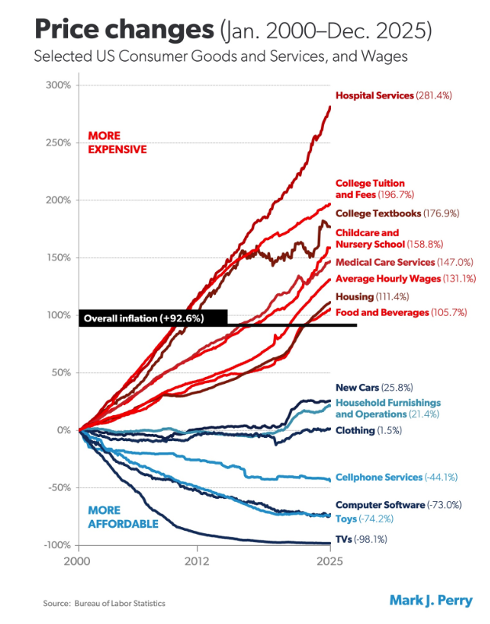
Note. Pooley, G. L. (2026, January 27). Rethinking the cost of living with Mark Perry’s “chart of the century.” Human Progress. https://humanprogress.org/rethinking-the-cost-of-living-with-mark-perrys-chart-of-the-century/
To improve our healthcare system, policymakers must focus on promoting individual control and increasing the affordability of health coverage. A critical element of patient-centered healthcare is an expansion of health savings accounts (HSAs). Rather than federal policy prioritizing insurance companies, expanded HSAs empower patients to determine how their health care dollars are spent. The WFTC took important steps in this direction. Beginning in 2026, all Bronze and Catastrophic plans are automatically HSA-qualified, and direct primary care arrangements are compatible with HSA participation for the first time. The Trump Administration should continue to increase contribution limits to HSAs so that more of a patient’s costs receive the preferential tax treatment that employer-provided health insurance payments do. Likewise, patients should be allowed to enroll in any insurance plan approved by their state health insurance commissioner and use their HSA dollars to pay for monthly health plan premiums or alternative coverage arrangements. This could be combined with both catastrophic coverage for emergencies and condition-specific coverage for planned health needs. Following that same principle, ACA (Obamacare) subsidies should go directly to patients’ HSAs, instead of insurance companies, increasing the scope of how Americans could use them. It would allow our fellow Americans to use these subsidies to pay for health care directly, including direct primary care with doctors and hospitals, or to pay for health care coverage offered in their state.
America First healthcare would also remove some of the perverse incentives plaguing patients. Currently, Medicare pays hospital-owned facilities two to three times as much as independent physician offices for the same service. This creates an enormous incentive for large hospital chains to acquire outpatient practices in order to generate outsized profits for the same treatment. The second Trump Administration has already begun this process, finalizing a rule extending site-neutral payments to drug administration services at off-campus hospital outpatient departments beginning in 2026. In 2021, the Committee for a Responsible Federal Budget estimated that site-neutral payments would save taxpayers more than $153 billion in Medicare spending over the period between 2021 and 2030 and substantially reduce premiums and cost-sharing for Medicare beneficiaries by $94 billion (Committee for a Responsible Federal Budget, 2021). In total, these changes could save patients and taxpayers between $346 billion and $672 billion over the next decade (Committee for a Responsible Federal Budget, 2021).
One of the greatest challenges to containing the medical inflation plaguing families is the fact that one often doesn't know what they are paying for medical services at the time they are performed. Just as Americans see prices posted for the food they buy at the grocery store, the clothes they purchase at the mall, and the gas they buy when they fill up their car, prices should be posted by hospitals and doctors' offices for the procedures they offer in non-emergency situations. The current practice of shockingly high bills showing up a month after the medical service has been conducted makes it impossible for Americans to shop around and allocate their healthcare dollars efficiently. While the Trump Administration has taken significant steps to enforce hospital price transparency and strengthen disclosure requirements, compliance remains uneven. Under America First policies, price transparency should be codified into statute to return competition to healthcare and to bring down its extraordinary cost.
One of the fastest-growing expenditures for America's seniors is the cost of prescription drugs. Between 2011 and 2021, America's annual spending on prescription drugs increased from $366 billion (U.S. Department of Health and Human Services, Office of the Assistant Secretary for Planning and Evaluation, n.d.-a) to $603 billion (U.S. Department of Health and Human Services, Office of the Assistant Secretary for Planning and Evaluation, n.d.-b) (adjusted for inflation), a 64% increase. The second Trump Administration has made progress on the effort to lower prescription drug prices through its signature Most-Favored Nation (MFN) program. The Administration and over a dozen major pharmaceutical companies made voluntary deals to reduce brand-name drug prices to align with the lowest prices in developed countries (The White House, 2025j); available for consumers to directly purchase through the key delivery mechanism, "TrumpRx." The program has allowed consumers to face significant discounts off drugs relative to the sticker price; for instance, the Wegovy Pill, a weight-loss drug, is listed on TrumpRx at $149/month, an 89% decrease from the original (TrumpRx, n.d.). Expanding these deals to cover critical prescription drugs is an innovative way to lower costs, increase choice, and enhance transparency.
Another crucial lever that the second Trump Administration has pulled to lower costs for Americans is addressing pharmacy benefit managers' (PBMs) freeloading in the healthcare system. Studies have shown PBMs make up 40% or more of the costs of a prescription drug (Weinstein & Schulman, 2020), which comes through spread pricing, keeping rebates, and steering patients towards the PBM's pharmacy and higher-priced medicine. The Great Healthcare Plan (The White House, n.d.) looks to address this and other freeloading in the system by ending kickbacks between PBMs, brokers, and consultants. Also, the Plan expands over-the-counter (OTC) switching for certain drugs, which means that Americans will get greater choices without having to use their health insurance. Over 80% of all prescriptions were processed by three PBMs (Bollmeier & Griggs, 2024), and the Great Healthcare Plan will ensure that these companies cannot continue their stranglehold on the industry, fulfilling the second Trump Administration's promise to give Americans back control of their healthcare.
Key Policy Recommendations
In each of the seven economic pillars (energy, deregulation, spending, taxation, financial reform, trade, and healthcare), this report identifies actionable steps policymakers can immediately take to advance America First policies. This section summarizes the 15 major policies across these domains, including a mix of executive and legislative action. Fully advancing an America First agenda starts with, but does not end with, these policies; policymakers should always pursue innovative ideas that reduce government overreach and empower Americans, in turn delivering growth and affordability.
- Streamline the permitting process for accessing deposits of critical minerals from copper, cobalt, and rare earths, and make available more land for exploration and extraction.
- Embrace nuclear energy and small modular reactors (SMRs) as part of the plan to further advance American dominance.
- Reward localities that take deregulatory actions to boost housing supply (e.g., streamlining permitting, ending excessive environmental regulations, and building codes) by prioritizing them for federal housing benefits
- Reform NEPA by significantly limiting its scope and requiring a streamlined process for projects under review, which can incentivize construction and revitalize manufacturing
- Fully end the marriage penalty that discriminates against marriage and punishes dual-earner couples
- Eliminate special interest deductions like SALT to simplify the tax code and reduce compliance costs.
- Cap the growth of mandatory spending programs to bring federal outlays in line with revenues and curb the primary driver of the national debt.
- Extend the WFTC’s work and citizenship verification requirements from Medicaid to SNAP, TANF, and federal housing assistance to ensure entitlement dollars only reach eligible Americans.
- Establish a commission to evaluate the Fed's monetary policy conduct, governance, and scope, and recommend reforms to its statutory mandate and nominee criteria.
- Break the ISS-Glass Lewis duopoly through antitrust review, regulatory parity under the Investment Advisers Act, divestiture of foreign ownership, and pecuniary-only standards under ERISA.
- Build on the GENIUS Act by passing the CLARITY Act and other market structure legislation that divides oversight between the SEC and CFTC, ensuring America remains the global hub for digital asset innovation.
- Introduce a proposal at the WTO that will strip members of their MFN privileges if they fail to adhere to core trade obligations and pursue separate trading blocs built on balance and transparency if those reforms fail.
- Submit the trade agreements negotiated by the second Trump Administration for ratification to permanently codify incentives for domestic manufacturing into law
- End kickbacks from PBMs to the large brokerage middlemen that deceptively raise the cost of health insurance.
- Expand OTC access for verified safe prescription drugs so that Americans can purchase routine medications directly, lowering costs and reducing reliance on doctors' visits.
Conclusion
The American people have been offered two very different visions for the path of our economy. The path of the progressive Left is central control of liberal elites who substitute their priorities over those of the American people, redistributing the hard-earned income of Americans based on political expediency and a religious zealotry for climate alarmism. The America First approach offers abundance, individual decision-making, a greatly scaled-back federal government, and competition that will bring down prices and result in widely shared prosperity. The America First economic plan has already begun to deliver results, and its continued implementation will once again make our nation the economic envy of the world and facilitate the financial and national security the American people need.
Resources