Ted Ellis
March 4, 2026
Nuclear Energy Benefits American Families
Nuclear power plants can help Americans secure their corner of the American dream. Homer Simpson is a fictional character, but the kind of paycheck his plant job represents is very real: a steady, nuclear industry salary can buy a home, support a family, and keep the lights on in Springfield and across America.
That is the real story of nuclear power. It strengthens families by providing durable, high-skill careers, and it strengthens communities with stable economic foundations. Together, those benefits make nuclear an energy source that pulls its weight for American workers, neighborhoods, and the nation.
Families
The U.S. nuclear power industry directly employs about 73,800 workers in stable, well-paying careers. It also supports a deep bench of skilled, technical roles. Bureau of Labor Statistics data from May 2023 shows about 10,000 plant, system, and nuclear reactor operators earning around $120,000 a year on average, plus thousands of electricians, welders, machinists, and mechanics who also earn six-figure salaries.
Also, industry analysis finds that nuclear plants are the highest-paying generation source, providing more than 70,000 high-quality, long-term jobs at more than twice the U.S. median wage. Although such benefits are already significant, they may scale even further for American workers over time and as the industry continues to develop: the International Atomic Energy Agency projects 4 million-plus jobs in the global nuclear industry will exist by 2050. Because nuclear plants have long operational lives of as long as 60–80 years, they truly anchor multi-generational families—in contrast to the false promises of subsidy-dependent “green jobs.”
Communities
Generating employment also fosters new opportunities for supporting businesses that cater to workers and their families. According to Oxford Economics, the nuclear power sector indirectly supported 69,583 workers across its supply chain in 2022, adding $13.5 billion to the U.S. economy. The same report finds that induced activity—spending by workers employed directly and indirectly—supported another 113,433 jobs.
In total, direct, indirect, and induced activity generated $15.9 billion in federal, state, and local tax revenue for the public services American communities rely on.
On average, each U.S. County that hosts a nuclear power plant sees about 1,758 jobs and $770 million in GDP supported directly and indirectly by that plant. Studies show that these economic effects may be even stronger in some regions: in the Southeast,1 every ten nuclear jobs (for which wages exceed regional averages by 65.5%), generate 18 additional jobs elsewhere in the regional economy, a significantly higher multiplier than other industries. That kind of economic presence is one reason widely appreciated in their communities.
A Good Neighbor
Though some activists may portray nuclear power as disliked or barely tolerated, the truth is far different—nuclear power is a good and popular neighbor. The 2022 nationwide “nuclear neighbors” survey found that 91% of people living within 10 miles of a U.S. nuclear plant have “a favorable impression of their plant, 88% are favorable to nuclear energy, and 78% would find a new reactor acceptable at the plant site.”
Local residents also see nuclear plants as economic assets and good neighbors: 92% say the plant provides good jobs for local people, 91% say it helps the local economy, 87% say the plant does a good job of protecting the environment, and 75% are aware of the plant’s community services such as support for schools and local organizations. Plant neighbors also report feeling safe: 83% rate the nearby plant’s safety highly, and 93% express confidence (52% express strong confidence) in the operating company’s ability to run the plant safely and withstand severe natural events.
The Nation
According to Oxford Economics, U.S. nuclear plants in 2022 provided about 19% of all electricity generation (18% in 2023 and roughly 20% annually since 1990). Meanwhile, the broader nuclear power industry supported 256,849 jobs nationally and contributed roughly $63.8 billion to U.S. GDP. The same analysis finds that in 2022 the commercial nuclear industry added roughly $64 billion to U.S. GDP and paid about $16 billion in federal, state, and local taxes.
In addition to nuclear power’s direct benefits, research from the America First Policy Institute shows that commercial nuclear plants depend on a robust supply chain of domestic builders, suppliers, engineers, and skilled trades. Therefore, a healthy nuclear sector reinforces the broader industrial base on which the defense industrial base relies—which is why lifting state-level bans is vital for rebuilding capacity.
Safety
U.S. nuclear power plants produce near-zero air pollution and offer some of America’s safest jobs: Forbes writes that nuclear power is the safest job in America (and a hundred times safer than jobs in wind and solar); an October 2024 study found the nuclear sector’s rate of non-fatal work injuries is one-seventh that of the overall electric power industry, one-sixteenth that of manufacturing, and one-fifth that of professional services.
Though high-dose radiation is known to have harmful effects, nuclear power plants have strict standards to limit radiation exposure for workers and nearby residents, as research from the America First Policy Institute observes. The question is whether the additional radiation from living near a nuclear plant cause harm. The evidence suggests it’s unlikely. The doses are simply too small relative to the radiation we already receive daily. Even for the partial meltdown at Three Mile Island, multiple long-term studies failed to find detectable adverse health effects.
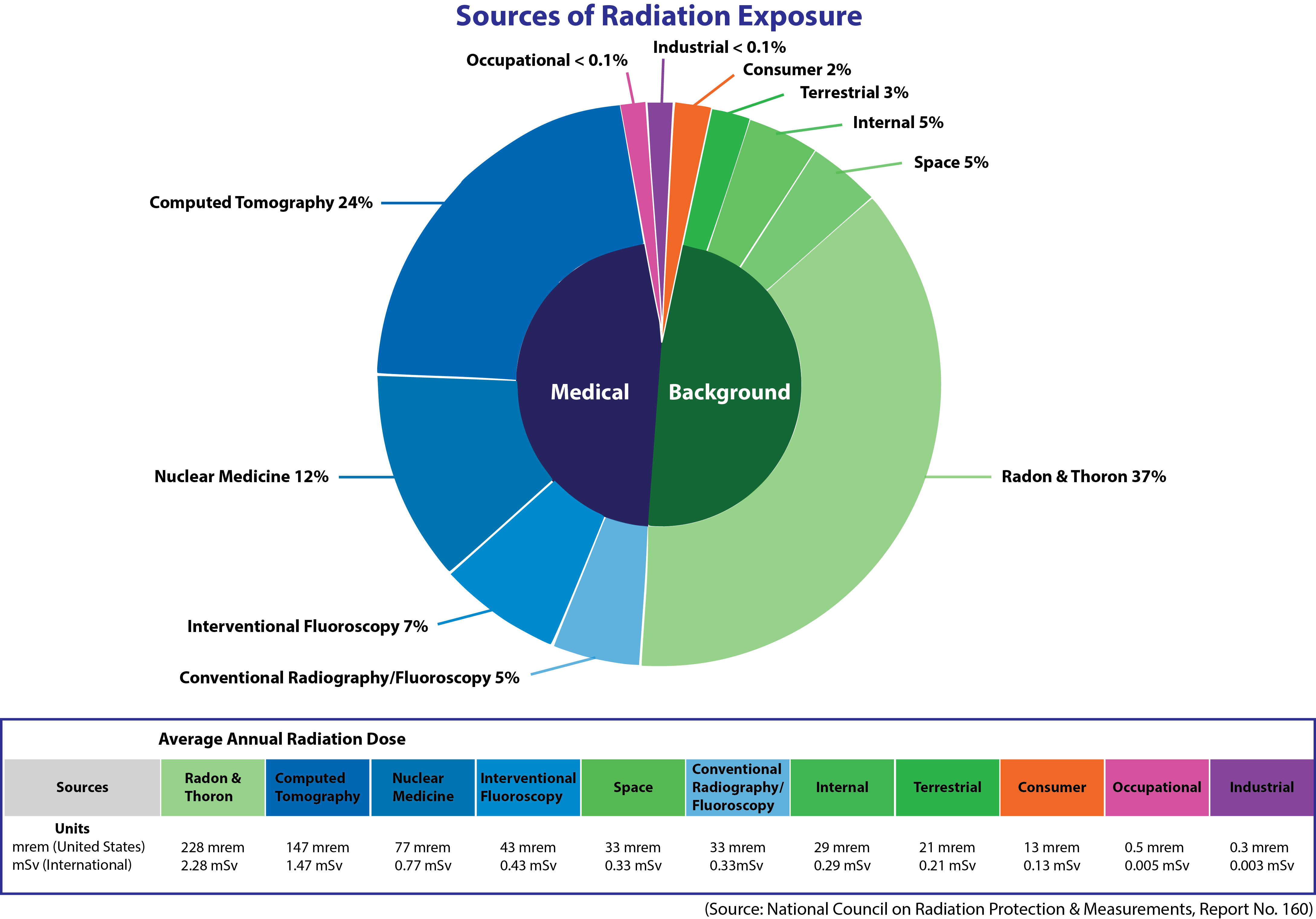
According to the U.S. Environmental Protection Agency, the dose from living near a nuclear power plant (<1 mrem) is more than 40 times less than one mammogram and 30 times less than simply living at sea level for a year (21 mrem; see “terrestrial” radiation in the chart below). Similarly, the U.S. Nuclear Regulatory Commission notes that living within 50 miles of a nuclear power plant adds far less additional radiological exposure than wearing an LCD wristwatch, traveling on a single cross-country flight, or having a smoke detector in the home.
Conclusion
For decades, too many policymakers have treated energy as something to ration rather than something to produce. Nuclear power is the opposite of that mindset. It is a proven way to deliver reliable energy, good jobs, and a deep bench of skilled work that strengthens communities for generations. An America that believes in growth, industry, and opportunity should make it easier to build and keep nuclear plants, because national strength starts with local strength.