David Vasquez
February 3, 2026
We Need Reliable Energy that Can Weather Any Storm
In the final week of January, Winter Storm Fern enveloped more than 200 million Americans in its cold embrace, driving them to crank up their thermostats and pushing the electric grid to its limits. Many Americans experienced power outages, and were forced to bundle up in their own homes amidst sub-freezing temperatures. The severity of Winter Storm Fern resulted in the tragic loss of over 90 lives, according to the Weather Channel. The frigid temperatures and unfortunate loss of life provide a stark reminder: when extreme weather threatens the grid, dispatchable and reliable baseload energy is non-negotiable.
Fern, and other major storms, highlight the chronic failure of so-called renewable energy sources to provide reliable power when it is absolutely necessary. During a crisis, Americans need reliable energy for warmth and safety.
There are three Independent System Operators (ISO) and four Regional Transmission Organizations (RTO) that administer regional electric grids across the nation. All four regional grid operators faced significant challenges during Winter Storm Fern: the Electric Reliability Council of Texas (ERCOT), Midcontinent Independent System Operator (MISO), PJM Interconnection, and Independent System Operator-New England (ISO-NE). Despite the strain of high electricity demand, traditional energy sources were called on to prevent grid failure. In contrast, wind, solar, and batteries—the much-vaunted “green” energy options—failed to deliver a fraction of their nameplate capacity.
This storm, once again, demonstrated what proponents of energy realism have long said: “green” energy, despite trillions of dollars in subsidies and overt government support, remains a “reliably unreliable” source that often fails at the most inopportune times. Reports indicate that “green energy failed America" during the most intense of the Winter Storm Fern weather. On January 25, EIA data indicate that wind, solar, and batteries together accounted for only 10% of the nation’s generation mix, while fossil and nuclear fuels combined accounted for more than 80%.
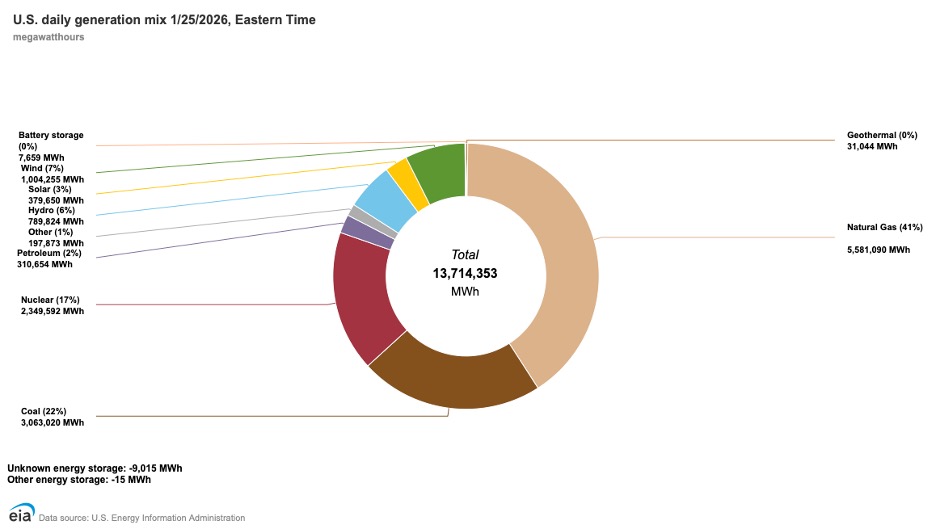
Source: EIA U.S. Daily Generation Mix for January 25, 2026
In New England, as the storm reached its height by midday on Sunday, January 25, fossil fuels and nuclear energy accounted for 83% of the region’s total resource mix (i.e., the energy required to heat homes and businesses). Renewables, during the same period, accounted for approximately 5% of total power output from oil, gas, and nuclear.
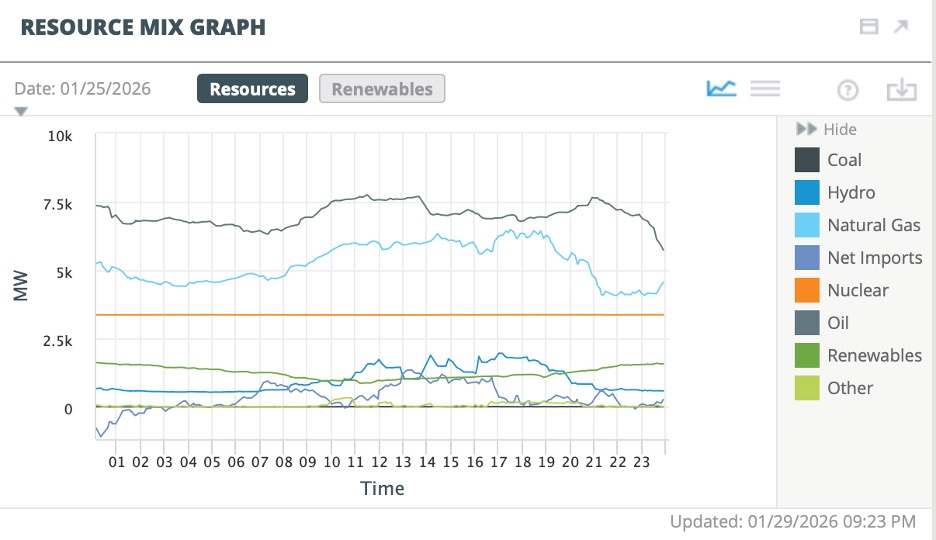
Source: NE ISO Resource Mix Graph for January 25, 2026
The disastrous mismatch between nameplate capacity and accredited (or actual) capacity underscores the immense risks of relying on renewable energy. Even as some areas suffered outages, grid operators avoided a Winter Storm Uri-like grid blackout (which impacted more than 4.5 million homes in 2021), thanks to the reliability of fossil fuels and nuclear power. In New England, oil was called on to address the low output of renewables and limited natural gas supplies, driven by state policies that restrict the development of pipelines.
Energy surpluses, redundancy, and reserve margins are not happy coincidences, and they should not be treated as such.
The Trump Administration’s agenda to make America energy-dominant has yielded real-world results that helped the nation weather this historic storm. America First energy policies have boosted U.S. oil and natural gas production to record levels, protected existing coal plants from rushed closures, and opened federal lands to new coal leases. Reliable power is made possible by common-sense energy policy that targets the production of affordable domestic energy sources.
As Winter Storm Fern abates, Americans continue to enjoy reliable power thanks to a focused, committed mission to provide the nation with reliable, abundant energy. But this storm should serve as a clear reminder that energy policy must have one clear goal: to provide affordable, reliable power that protects American’s quality of life and standard of living.