Eat Real Food: How the Dietary Guidelines Help Make Americans Healthy
Key Takeaways
« The Trump Administration’s updated Dietary Guidelines for Americans, 2025-2030 (DGAs) and their reset on federal nutrition policy are already having positive effects on Americans.
« More than half a billion dollars in Federal food investments made daily by taxpayers through USDA, HHS, DOW, and other agencies will usher real, more whole and nutritious foods integrated into diets and to snack selections which will result in better health outcomes for hundreds of millions of Americans.
« Through labeling changes and increased staple food stocking standards for retailers, SNAP recipients will have more of an assortment of staple foods like fruits and vegetables, proteins, and whole grains. Choices of refined carbohydrates will decline over time in favor of more healthy, whole foods.
Introduction
On January 7, 2026, Secretary of Agriculture Brooke Rollins and Secretary of Health and Human Services Robert F. Kennedy, Jr., released the Dietary Guidelines for Americans 2025-2030 (DGAs) along with the Scientific Foundation for the Dietary Guidelines for Americans, a companion document detailing the underlying nutrition science (U.S. Department of Health and Human Services, 2026). The DGAs were lauded as the most significant reset of federal nutrition policy in decades, prioritizing high-quality protein, healthy fats, fruits, vegetables, and whole grains.
These are not just voluntary changes for consumers; they also represent the requirements in federally funded food and nutrition programs (e.g., HeadStart Program, school lunches). In addition, since the DGAs call for a greater demand for American-grown, healthy, whole food, these changes will result in a greater onshoring of production efforts for the American farmer (Jacobsen, 2026). This can create a new opportunity for partnership between domestic producers and federally funded nutrition programs, prioritizing foods that are nutrient-dense and locally sourced. From enhancing the meals served to children in schools to strengthening the agricultural economy, the DGAs impact how Americans nutrition.
A Brief History of Federal Nutrition Guidance
“Agriculture is our wisest pursuit, because it will in the end contribute most to real wealth, good morals, and happiness,” said Thomas Jefferson, America’s third president (Jefferson, 1787). When Congress codified the DGAs in 1990 under the National Nutrition Monitoring and Related Research Act, it was hardly the first time that the federal government had paid attention to the food Americans had eaten (HR 1608, 1990). America’s agrarian history has resulted in one-hundred and thirty years of federal attention into the nation’s food supply, beginning with Farmers’ Bulletin No. 23.
Farmers’ Bulletin No. 23
In the original dietary guidelines, Foods: Nutritive Value and Cost, W.O. Atwater, Ph.D., explains that “[the quart of] milk comes nearest to being a perfect food, [it] contains all the different kinds of nutritive materials that the body needs” (Atwater, 1894, p. 3). Congress had just appropriated $10,000 for the Office of Experiment Stations at the USDA to “enable the Secretary of Agriculture to investigate and report upon the nutritive value of the various articles and commodities used for human food.” Atwater was chosen to develop the first federal dietary guidance as the leading U.S. authority on human nutrition and energy metabolism at the time, with experience in laboratory data, field surveys, and policy formation. As head of the federal nutrition investigations within USDA’s Office of Experiment Stations, he had already conducted large-scale studies on the chemical composition and cost of foods, food consumption patterns in American households, and human energy needs across different occupations and income levels (U.S. Department of Agriculture, Agricultural Research Service, n.d.).
Professor Atwater, in Farmers’ Bulletin No. 23, as part of the instructions from Congress, laid out not just the nutrients in food but the economics behind the food. These guidelines were practical – explaining why farmers churn cream to make butter (to separate the other ingredients from the fat) and explaining profitability of separating milk sugar from whey (his suggestion was to feed to the pigs, who convert the carbohydrates into the fat of the pork). Bulletins often focused on very practical “how‑to” guidance, such as preparation of land, pest control, food and nutrition, and home management, so farmers could directly use the recommendations on their own farms (University of North Texas Libraries, n.d.).
The guidelines for food in 1894 are similar to today: proteins, fats, carbohydrates, and ‘mineral matters.’ Protein was lauded as a “tissue former,” carbohydrates and fats are energy sources to “yield heat and power.” Protein was regarded as a super food to produce heat and power (energy) and to build and repair tissues. Professor Atwater laid out calculations of daily diets, customizing food intake and nutrition information by a person’s energy needs. According to Atwater, Americans ate too “little protein and too much fat, starch and sugar…due partly to our large consumption of sugar and partly to our use of such large quantities of fat meats [(e.g., pork sausage, beef ribs, ham, mutton loin)] ….” (Atwater, 1894, p. 18). Protein needs, listed by pounds per protein, began at roughly 113 grams (.25 pounds of protein) and went up to 217 grams (.48 pounds of protein), and were measured based on physical activity.
Figure 1
American and European Dietary and Dietary Standards (1894)
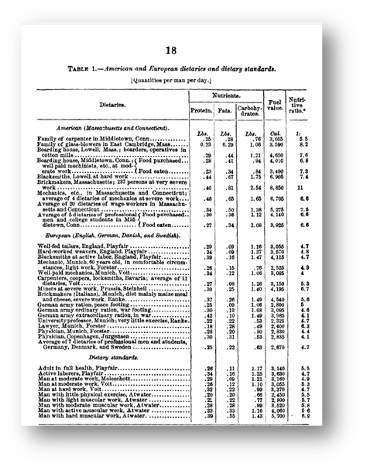
Note. Reprinted from Foods: Nutritive Value and Cost (Farmers’ Bulletin No. 23, p. 18), by U.S. Department of Agriculture, 1894, Agricultural Research Service. https://www.ars.usda.gov/ARSUs...
Principles of Nutrition and Nutritive Value of Food: Farmers’ Bulletin No. 142
Professor Atwater was lauded as a prolific researcher, investigator, advocate, and writer. He “scouted top European laboratories and solicited articles and abstracts from the foremost researchers in agricultural and human nutrition studies.” After the success of Farmer’s Bulletin 23, Atwater studied food groups, effects of cooking and processing on nutritional value, and “supervised intake studies of black sharecroppers, Mexican families, poor whites, and inmates in state mental institutions” (U.S. Department of Agriculture, n.d.). In 1902 (and again revised in 1904), the USDA published the second prolific work by Atwater: Farmers’ Bulletin No. 142, the Principles of Nutrition and Nutritive Value of Food (Atwater, 1902).
Building on his seminal work, Atwater discussed food preparation, food digestion, and the impact of cooking on nutrition. He explained that food should be prepared in such a way as to avoid disease. He cautioned against overeating, and he advised Americans that the most expensive food was not the best, as they should instead seek out the most healthful food at the lowest cost. In his discussion of “Needless Use of Expensive Foods,” Atwater proclaimed that the poorest Americans were being taught to spend large sums of money on high-priced health foods (at this time, a head of lettuce), which were a rarity for even the richest Americans, instead of seeking to maximize their dollars on a variety of other healthy foods. He claimed that “the average American family wastes as much food as a French family would live upon,” again making the point that healthy eating and economy were intertwined (Atwater, 1894, p. 24).
Mid-Century Changes to Dietary Guidelines: Food for Young Children (Farmers’ Bulletin No. 717)
Figure 2
Cover page of “Food for Young Children” (Farmers’ Bulletin No. 717, 1916)
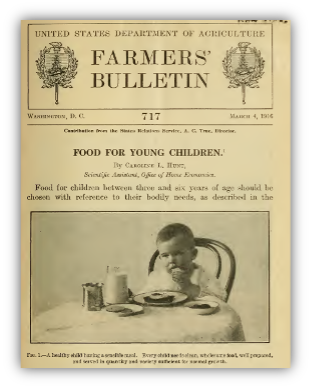
Note. Reprinted from Food for young children (p. 1), by C. L. Hunt, 1916, U.S. Department of Agriculture. https://dn720802.ca.archive.or...
As scientific breakthroughs allowed Americans to learn more about food, Caroline Hunt, a Scientific Assistant with the Office of Home Economics at the USDA, published Bulletin No. 717 in 1916 about the appropriate nutrition for children (Hunt, 1916). Amongst other things, the bulletin promoted the use of whole milk in children, not just for its nutritional content but its “growth promoting” ability and its ability to have the body make good use of other foods. According to Hunt, “apparently nothing can serve so well as the basis for the diet of the healthy child [than milk].” While the breakthrough in dietary fiber as a part of digestion was not made until the mid-twentieth century, Hunt reiterated that vegetable intake in children helps with digestion and constipation—common knowledge that was replaced with scientific fact decades later (Price, 2018). Hunt also understood the critical need for children’s diets to be balanced with rich minerals. Understanding that milk lacks high levels of iron, she suggested using egg yolks and leafy greens served alongside milk to create a wholesome meal. Her observations, though simple, provided parents with the right science and common-sense thinking to adequately feed their children. Throughout the early to mid-twentieth century, childhood obesity was extremely uncommon, as children’s diets were mostly comprised of real, whole, nutrient-dense foods that emphasized milk, butter, vegetables, and fruit.
Feeding a Nation at War: The Basic Seven Food Guide (1943)
Figure 3
The Basic Seven Food Groups During World War II
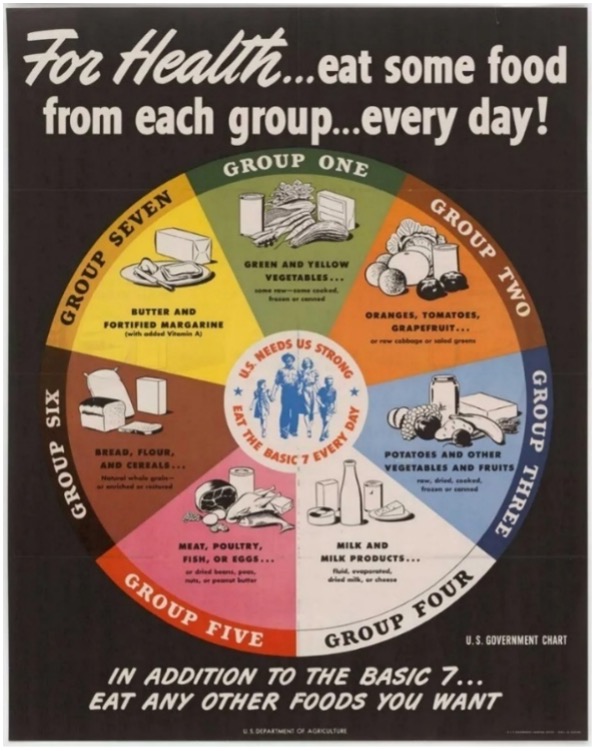
Note. Reprinted from “World War Wednesdays: The Basic Seven,” by S. Wassberg Johnson, 2019, The Food Historian. https://www.thefoodhistorian.com/blog/world-war-wednesdays-the-basic-seven. © 2019 by The Food Historian.
In the 1940s, America experienced significant progress in technology, innovation, and medicine, from mass car production and commercial flight to large-scale manufacturing and the medical use of penicillin. But in 1943, amidst World War II, the USDA stepped in to address the U.S. food shortages. The government introduced “The Basic Seven,” with the emphasis of keeping the population strong, fit, and healthy during wartime (Johnson 2019). With new nutrition-science research, the USDA chose seven food groups that highlighted eating foods that are nutrient-dense, rather than looking at the caloric intake. The first three groups focused on leafy green vegetables, fruits (e.g., citrus), and starchy vegetables. The food in these categories contained high levels of Vitamin A and Vitamin C, which helped American soldiers prevent eye disease and build up their immune systems (Sajovic et al., 2022; Dresen et al., 2023).
Groups four and five contained milk products and protein, directing the population to drink a substantial amount of milk for its source of calcium, which supports bone health and muscle movement. Meat, poultry, and fish were heavily rationed, which forced the government to turn to researchers to find other sources of protein in foods. A 1943 Harvard study conducted a two-month feeding experiment that concluded that adults can live on one ounce of meat per day and only 10% of the minimum protein requirement needs to come from an animal source (Kluger 2007). Another study discovered further alternative sources of protein from beans, nuts, and peas, allowing Americans to meet the daily recommended amount without using animal products (Burkholder, 1943).
Group six included bread, a foundational piece of the American diet at the time. In the 1940s, specifically during wartime, bread, hot cereal, and toast were cornerstones of every meal. Around this period was the rise of white bread, due to the elimination of wheat germ. White flour was popularized by the notion that it was “enriched” with many minerals and vitamins and therefore healthier than normal wheat germ. White flour’s popularity influenced many other products, including cereals and baked goods. Group seven, the final food group, included butter and margarine. Butter, along with fruits and vegetables, contained 11% of a person’s daily recommendation for Vitamin A, and also provides butyrate, a short‑chain fatty acid linked to gut and metabolic health.
The mid-century dietary guidelines, with shifting recommendations from the original Farmers Bulletins, reflected a scarcity-driven, wartime mentality. The U.S. government encouraged the population to eat foods with longer shelf lives and minimize their animal-based protein intake. While this guidance was an appropriate and perhaps unavoidable response to the immediate demands of the war effort, several scholars have noted that such emergency measures should have been explicitly time‑limited and not allowed to shape policy or practice once wartime conditions had passed (Mozaffarian et al., 2018).
A Sweet Shift: The Rise of the Modern American Diet
The Basic Four (1956)
Figure 4
Food for Fitness: A Daily Food Guide
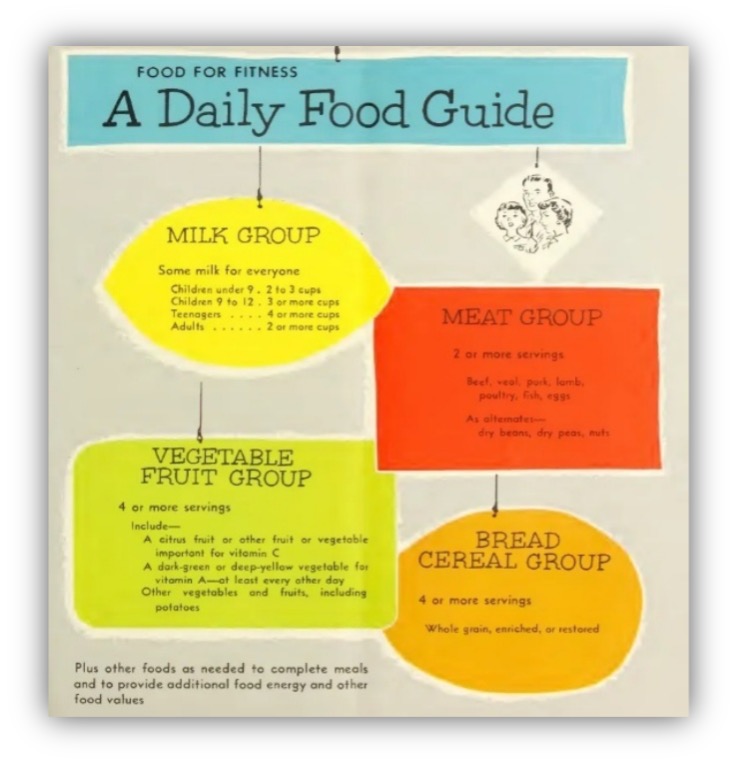
Note. From Food for Fitness: A Daily Food Guide (Consumer and Food Economics Institute, Agricultural Research Service, USDA, 1958), USDA National Agricultural Library Discovery Services. https://search.nal.usda.gov/discovery/fulldisplay
The 1950s marked a turning point in America’s food production and nutritional culture. The food industry was pivoting to more processed and freeze-dried foods, reflecting consumer sentiment which prioritized speed and efficiency for the American worker in a time of rapid innovation and technology. The USDA updated the dietary guidelines in 1956, calling it “The Basic Four – Food for Fitness” and focusing on four main food groups: milk, meat, fruits/vegetables, and breads/cereals (U.S. Department of Agriculture, Economic Research Service, 1992). This was the first set of guidelines to introduce daily servings, recommending that milk and protein be two servings per meal, while fruits and vegetables, bread, and cereals can be four servings per meal. This set of dietary guidelines was built on the previous guidelines, claiming to keep Americans healthy in a post-World War II era.
In 1957, just a year after the release of the “basic four” guidelines, two researchers discovered an enzyme called glucose isomerase that converts glucose into fructose in corn syrup, calling the creation “High Fructose Corn Syrup” (HFCS). This made the process of sweetening food products more efficient, as it was inexpensive to produce, easy to transport in liquid form, and had a longer shelf life due to its lack of crystallization (unlike sugar in its more naturally occurring forms). In the 1970s, HFCS accelerated in the American food supply and was incorporated as a nutritional staple in beverages, baked goods, and cereals. Since this alternative sweetener was economically attractive to manufacturers, by the late 1990s, HFCS production increased by more than 1000% (Bray et al., 2004).
During this time, healthcare providers started to notice that obesity rates increased dramatically in children and adults, doubling from 15% to 30% (Parker, 2010). As researchers studied the nutritional changes that contributed to the rise of the obesity epidemic, they discovered that fructose, unlike sucrose (natural sugar), did not trigger insulin or leptin (hormones that regulate appetite) signals. Instead, fructose is metabolized predominantly in the liver, where it is readily converted into fatty acids. Many experts grew to believe that HFCS and other fructose-based sweeteners impacted hunger signals, which made individuals believe they were less full than they actually were, increasing their caloric consumption. While there are many causes of the increase in obesity in America, experts point to the addition of HFCS in food production as a catalyst in the obesity-related disease epidemic (Bray et al., 2004).
The Hassle-Free Daily Food Guide (1979)
Figure 5
The Hassle-Free Daily Food Guide
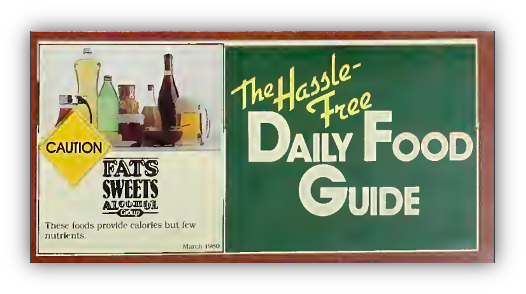
Note. Reprinted from The Hassle-free guide to a better diet (Leaflet No. 567), United States. Science and Education Administration (1980), U.S. Department of Agriculture. https://search.nal.usda.gov/discovery/fulldisplay
For decades, nutrition policy focused on nutrient deficiencies and nourishment, but by the late 1970s, the focus shifted from what Americans should eat to what they should avoid. Diet-related chronic diseases were on the rise, and the USDA took notice and acted by releasing “The Hassle-Free Daily Food Guide” (U.S. Department of Agriculture, Economic Research Service, 1992).
The 1979 guide expanded upon the “Basic Four” introduced a decade earlier by adding a fifth category: fats, sweets, and alcoholic beverages. This version of the dietary guidance marked the first explicit focus on consumer behavior, particularly the principle of moderation. In doing so, the federal government signaled a shift from eating primarily for nourishment toward avoiding overconsumption. At the same time, however, the guidance actively promoted carbohydrate‑rich foods such as bread, cereals, and oatmeal for daily intake. It also failed to account for the rapidly increasing availability of processed foods and refined grains, a limitation that reduced the effectiveness of the recommendations and constrained their potential to improve the overall nutritional quality of American diets (Institute of Medicine [US] Committee on Dietary Guidelines Implementation, 1991).
With more of the population developing diet-related illnesses, rather than challenging the food industry‘s growing reliance on ultra-processed foods, federal guidance conformed to the new reality of the American modern diet.
The Food Guide Pyramid (1992)
Figure 6
Food Guide Pyramid (1992)
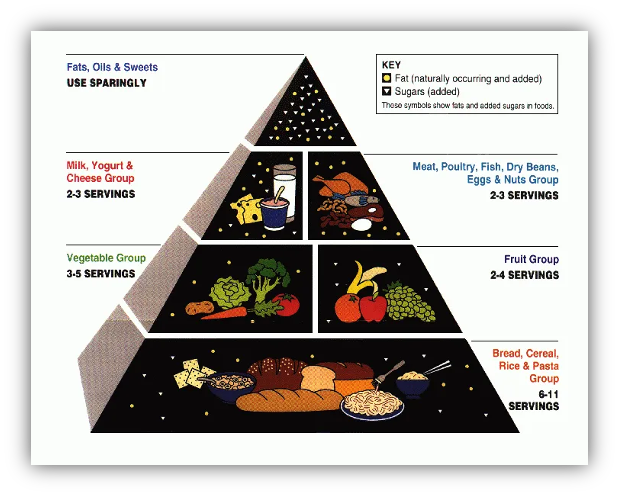
Note. Reproduced from “Grab your fork and travel back in time with these old USDA dietary guidelines,” by Smithsonian Magazine, 2015, https://www.smithsonianmag.com/smart-news/travel-back-time-these-old-usda-dietary-guidelines
Few governmental nutrition policy initiatives have exerted as profound an influence on American dietary culture like the 1992 “Food Guide Pyramid” (U.S. Department of Agriculture, Economic Research Service, 1992). Considered to be one of the most influential and controversial nutritional graphics in American history, this set of guidelines was used to promote proportionality, showing the recommended servings for an individual per day. While the pyramid emphasized a higher intake of fiber-rich foods and grains while limiting fats and protein, the carbohydrate-heavy diet recommended that Americans eat more ultra-processed food and refined sugars (Stampfer & Willett, 2006). This major focus on grains did not come about solely from changes in science – it was also heavily influenced by various sectors of the food industry. Lobbying efforts from larger grain-based food companies, along with big meat and dairy companies, intensified, delayed the release of, and ultimately helped changed the federal guidelines. After release, large food companies that produced grain-based foods took advantage of the pyramid’s carb-heavy base and amplified their products through advertising, school lunch programs, and other federal food programs (Nestle, 1993).
Over time, this dietary guidance shaped an entire generation, normalizing low protein meals disguised as a “low-fat and fiber diet” into school lunches, fast-food restaurants, and pre-packaged meals. This dogma influenced adults and children to develop eating habits that eventually led Americans into what is now the “Chronic Disease Crisis” (U.S. Department of Health and Human Services, 2025). Today, more than half of Americans have prediabetes or diabetes, and 3 out of 4 Americans have at least one chronic illness. The shocking reality of these statistics is also reflected in healthcare spending, with 90% of U.S. health dollars going to treating chronic diseases (U.S. Department of Health and Human Services, 2026). Conditions such as type 2 diabetes, obesity, and cardiovascular disease are directly linked to diet and lifestyle. Experts have noted that since the release of the 1992 guidance, severity of diet-related chronic disease has increased.
Eat Real Food: Restoring the Foundations of Health
When President Trump announced his commitment to “Make Americans Healthy Again” during his administration, a central component of this agenda was the restoration of a healthier national food culture. As the Trump Administration has noted, the United States has moved from a food system grounded in locally sourced products from farms and neighborhood markets to one dominated by industrially manufactured foods engineered for convenience and extended shelf life. This new revolution of food production was sold to the American people for its added simplicity and affordability, but it came at the expense of real, nutrient-dense ingredients and, in many cases, of long-term health. Historical experience demonstrates that substituting a substantial portion of fresh, whole foods for an excess of ultra-processed products (e.g., products containing refined sugars and long, complex ingredient lists) contributed to increasing rates of diet-related chronic disease.
Figure 7
Dietary Guidelines for Americans: 2025
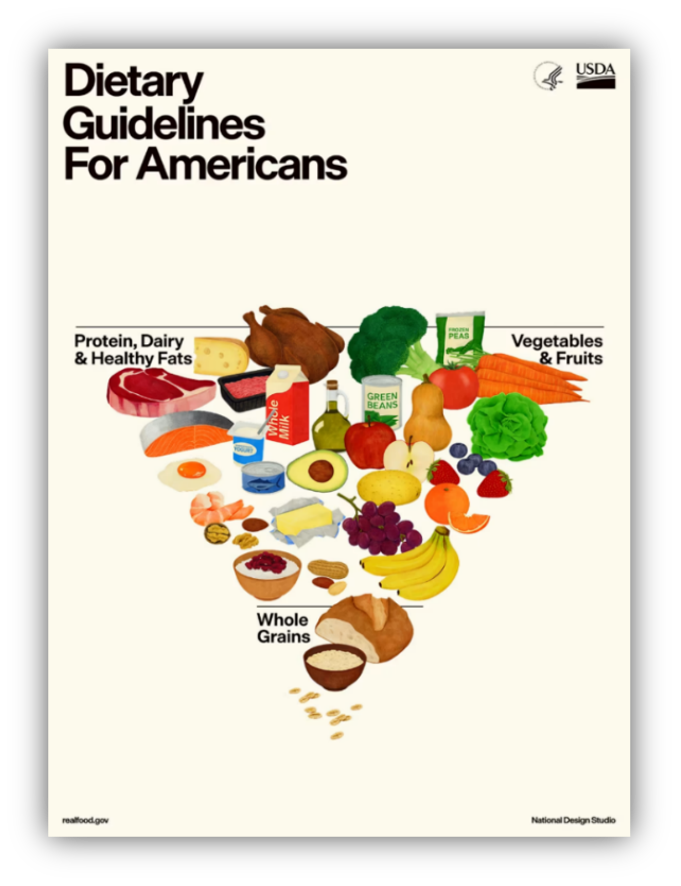
Note. Reprinted from Dietary Guidelines for Americans, 2025–2030, by U.S. Department of Health and Human Services and U.S. Department of Agriculture, 2026, https://cdn.realfood.gov/DGA.pdf
The New Food Pyramid (2025)
The 2025 release of the Dietary Guidelines for Americans 2025-2030 (DGAs) helped to reset American food knowledge by restoring and realigning federal guidelines with longstanding, scientific understanding of nutrition (U.S. Department of Health and Human Services, 2026). The updated guidelines focus on high protein, healthy fats, vegetables, fruits, and whole grains, encouraging Americans to avoid highly processed products.
Rooted in a Century of Nutrition Science
The new guidelines echo the foundational work of Atwater and Hunt, whose research and guidance were grounded in the growth, energy, and longevity of everyday Americans’ health, rather than being reflective of a narrow set of priorities from various sectors of the food industry. The approach outlined in the Scientific Foundation for the Dietary Guidelines for Americans builds on the strong early observations in our nation’s history with modern scientific research. Nutrient-dense foods like high-quality protein, healthy fats, milk, and fruits/vegetables are now shown to support long-term health and chronic disease prevention (U.S. Department of Health and Human Services & U.S. Department of Agriculture, 2025). As nutrition science has become more advanced, Americans know more about the same basic recommendations laid out in Atwater’s original work.
- High-Quality Protein:
Protein is the cornerstone of a healthy diet, containing nine vital amino acids for the synthesis of enzymes, neurotransmitters, and hormones. Research continues to reveal its positive effects on immunity and the renewal of tissues, bone, and muscles. Sufficient protein quantity is needed to maintain proper tissue repair and homeostasis since amino acids are not stored in the body. A clinical trial found that 67% of adults eating the recommended quantity of protein from the dietary guidelines reported weight loss and preservation of lean mass (U.S. Department of Health and Human Services & U.S. Department of Agriculture, 2025). Animal-based foods, including meat, poultry, seafood, eggs, and dairy, supply essential micronutrients like iron and zinc. Iron is necessary to transport oxygen via hemoglobin, and zinc is crucial for adequate immune function and cell growth (Walker et al., 2007).
- Healthy Fats: Healthy fats, such as avocados, nuts, and olive oil, are an important building block in human growth and development. It is an essential macronutrient that supplies energy, forms cell membranes, and regulates metabolism. Cardiovascular and neurological health is influenced by fats such as monounsaturated and omega-3 fatty acids, which reduce inflammation, support normal heart rhythm, and increase the communication between neurons (U.S. Department of Health and Human Services & U.S. Department of Agriculture, 2025). Omega-3 fatty acids are incorporated into cellular membranes in tissues, further regulating gene expression, cellular signaling, and lowering triglycerides, which lowers a person’s risk of heart disease, pancreatitis, and stroke (Kordas et al., 2004). Atwater found that fat is the most “energy-dense” macronutrient and should be consumed by people who need sustainable energy. For many years, “fats” have been labeled as unhealthy, but this new set of guidelines recognizes them as a staple for energy, growth, and metabolic health.
- Whole Milk: Milk has long been regarded as a foundational food in the human diet. From early nutrition research of Caroline Hunt to the national “Got Milk?” campaign, milk has been recognized for supporting bone health and for providing protein, healthy fats, and a significant number of vitamins to daily nutritional needs. For example, calcium, phosphorus, and potassium all contribute to bone health, and since 99% of the human body’s calcium is stored in bones and teeth, milk helps to reduce the risk of osteoporosis. Whole milk contains more than 400 different fatty acids, like C15:0 and C17:0, which decrease inflammation and support cardiovascular health. Additionally, a single cup of whole milk provides over half of the Daily Value for vitamin B12, a nutrient vital for red blood cell formation and the development of healthy nerve cells (Fletcher, 2024).
- Fruits & Vegetables: fruits and vegetables contain high concentrations of vitamins A and C, folate, potassium, and polyphenols. In citrus, peppers, berries, and carrots, there is a surplus of these specific vitamins (specifically vitamins A and C) that function as strong antioxidants, elevate immune cells, and support the epithelial layers of tissues (skin, gut, and lungs). In leafy greens, bananas, and avocados, there are high levels of potassium and folate, which regulate blood pressure, lowering the risk of heart disease, are vital for DNA synthesis, and are needed for tissue regeneration after a major surgery or injury (Kordas et al., 2013). Berries and grapes are high in polyphenols, reducing oxidative stress, which stabilizes cells and prevents chronic diseases from progressing to cancer and neurodegenerative diseases (Xu et al., 2024).
- Dietary Fiber & Carbohydrates: Carbohydrates serve as one of the primary sources of energy for the human body; however, the full benefits to humans are dependent on fiber content. Minimally processed, whole carbohydrates contain fibers that interact with the gut microbiome when it passes through the colon. Fiber is fermented into short-chain fatty acids (SCFAs), which improve gut health through regulating metabolism and inflammation (Vinelli et al., 2022). Other positive effects of fiber include stabilizing glucose levels, lowering LDL, and increasing stool bulk, consequently helping to reduce type 2 diabetes, heart disease, and GI disorders. On the other hand, highly processed carbohydrates lack fiber and micronutrients, usually digesting quickly and contributing to blood sugar dysregulation, which is a major driver of diet-related chronic diseases (U.S. Department of Health and Human Services & U.S. Department of Agriculture, 2025).
From Policy to Plate: DGA Implementation Across America
The updated Dietary Guidelines for Americans are not only focused on supporting consumer decision making, but they are also the nutritional framework for multiple federally funded programs that feed millions of Americans daily. The guidelines set a standard for 16 federal nutrition assistance programs and feed 1 in 4 Americans every year, totaling the spending to $142.2 billion in 2024 (U.S. Department of Agriculture, Economic Research Service, 2025c). Federal food programs are required to align products, procurement practices, and nutrition education with dietary guidelines in order to ensure that the food recommended is evidence-based and nutrient-dense and that taxpayer investments result in healthier outcomes for Americans.
Implementation in Existing Expenditures of Federal Agencies
The Supplemental Nutrition Assistance Program (SNAP) is the largest Federal food program impacted by the new Dietary Guidelines. SNAP supports 41.7 million monthly participants intended to be low-income families needing a hand up out of poverty. Since January of \2025, SNAP waivers in 23 states have been granted to restrict junk food from purchase (U.S. Department of Agriculture, Food and Nutrition Service, n.d.-a). At the same time, the 250,000 retailers in the SNAP program will more than double their stock of more nutrient-dense options in each food category, like fruits and vegetables, protein, dairy, and grains (U.S. Department of Agriculture, 2025). Additional changes are being made to other children’s health nutrition programs, like the USDA’s National School Lunch Program, to improve the nutritional quality of the food served to children across the country through the updated DGAs. More than 100,000 schools in America are part of the program where DGAs are shaping efforts, allowing children to have more nutrient-dense balanced options (U.S. Department of Agriculture, Economic Research Service, 2025b). USDA’s actions are increasing the intake of healthy foods with significant downstream metabolic benefits for families.
The new dietary guidelines are also expanding beyond USDA programs through various other government agencies. The Department of Health and Human Services (HHS) utilizes the DGAs in serving 251 million meals to older adults and people with disabilities through the Administration of Community Living. For instance, the HeadStart program will be updating requirements that will result in over 800,000 children receiving more nutritious meals and snacks (U.S. Department of Health and Human Services, Administration for Children and Families, Office of Head Start, n.d.).
Whole, nutrient-dense food will now be served to the men and women serving the nation through the Department of War (DoW). The Secretary of the Department of War, Pete Hegseth, is working alongside Chef Robert Irvine to serve healthier, protein-rich meals that nourish the military at a lower cost (NewsNation, 2026). Switching from ultra-processed foods to more nutritious whole foods will improve dietary patterns and save our troops money as they choose to eat more nutritious and palatable meals in Military dining facilities rather than choosing to pay out of pocket for fast-food alternatives. To continue serving America’s heroes the best, the Department of Veterans Affairs (VA) feeds 39 million meals annually and serves 107,000 meals per day to Veterans across inpatient settings, community living centers, and rehabilitation centers. In addition, programs like the Veterans Canteen Service (VCS) that operate cafes and coffee shops will now adopt DGA standards and offer healthier options (U.S. Department of Veterans Affairs, Veterans Canteen Service, n.d.).
As an accelerator to the implementation of the DGAs, Congress passed the Whole Milk for Healthy Kids Act, signed into law by President Trump in January 2026. This initiated the move away from the previous dietary guidelines, which removed saturated fats from selections but ignored the benefits of whole milk for children’s development and growth. Now, whole milk is back and lays the groundwork for these changes with Secretary Brooke Rollins calling it the “right move for kids, parents, and for America’s dairy farmers” (U.S. Department of Agriculture, 2026).
Advancing Children’s Health and Reducing Long-Term Costs
Historically, nutrition policy has contributed to the rising rate of diet-related chronic diseases; however, the new guidelines go back to basics using whole foods as a viable mechanism for reversing the pattern. The new guidelines maximize the cost-effectiveness of existing funds and reduce long-term taxpayer costs. Federal feeding programs mentioned previously, like the School Lunch Program, SNAP, and WIC (the Special Supplemental Nutrition Program for Women, Infants, and Children) will prioritize nutrient-dense whole foods already produced by American farmers. As access to protein-rich meals increases, domestic agriculture will respond with additional production to meet increased demand. These changes will deliver essential nutrients through affordable American-grown foods while improving health outcomes and lowering preventable healthcare costs for taxpayers (Berkowitz & Seligman, 2023).
The guidelines emphasize eliminating ultra-processed foods, which are expected to prompt more regulatory reviews from the Food and Drug Administration (FDA). Assessing ingredients such as additives in foods, especially in children’s exposure to potentially harmful chemicals, is key to protecting their future. While certain additives need further testing, others, like petroleum-based synthetic dyes, are already planned to be phased out by the 2026-2027 school year (America First Policy Institute, 2026). Reductions in ultra-processed snack foods that are funded through programs like WIC will result in reductions in childhood exposure to inflammatory ingredients, which may help reduce childhood obesity and diet-related chronic disease. Infant brain development and the metabolic health of children and their mothers will benefit from enhancements to the WIC program, as available food selections will soon include more prioritization of whole foods. Making real, fresh food more available through programs like WIC, SNAP, and school meals will reduce long-term health risks and improve health outcomes for families, eliminating the need for taxpayers to subsidize ultra-processed foods as the easiest or first option for kids.
Changing Consumer Behavior
Regular purchases from all Americans in the grocery store and in restaurants are also changing. These include cooking oils and other systemic, large-scale commodities used in all aspects of the American food system. These changes have the potential to improve health outcomes for all Americans and should drive down long-term healthcare costs, including from improvements in pediatric health within a generation. This will be due in part to healthier food available from guidance on limiting added sugars which will, for example, eliminate unnecessary sugars in flavored milk that are found in excess in HeadStart programs across America. Research shows that children will have long-term health benefits from these healthier choices (Centers for Disease Control and Prevention, 2025). Phase-outs of ultra-processed food will continue to extend to America’s workforce and will be seen in federal employee cafeterias, where modeling of higher protein and healthy fat-containing meals with less added sugars and refined carbohydrates will help improve workforce productivity and reduce sick days across the country. Additionally, existing nutrition education programs like SNAP-Ed will shift to covering the aspects of the new DGAs to parents on critical meals, which will soon impact the availability of healthy breakfasts for kids, and for other home-cooked meals (U.S. Department of Agriculture, Food and Nutrition Service, n.d.-b). These changes also align naturally with American agriculture. American agricultural producers are already producing many of these foods in sufficient quantities and have the ability to do so even more as demand rises from families eating even more nutrient-dense, cost-effective food products in the future. The guidelines align health goals with what American producers already do best (U.S. Department of Agriculture, Economic Research Service, 2025a).
These changes continue to naturally align with American agriculture. American farmers are producing many nutrient-dense foods in substantial quantities; however, they are bound by state regulators on packaging, food safety, and environmental restrictions that lead to downstream cost burdens on small and medium-sized producers. For example, many fresh produce and protein producers face state-level, ultra-specific extended producer requirements (EPRs) which hold them responsible for addressing failed local recycling laws for single-use packaging by using more expensive materials when they want to add value to their products by packaging at the farm level. These requirements, already in the books in CA, CO, ME, MN, OR, MD and WA, create significant compliance costs for producers to upgrade to more expensive packaging with minimal demonstrated benefit to the consumer or to society at large (Wagner et al., 2024).
The added costs then get passed on to consumers buying farm fresh food both in the form of higher packaging costs and of less supply of fresh real foods from producers who will not upgrade their packaging to be able to sell into these markets. These types of overregulation should be repealed as they merely support a pre-existing social policy agenda that resulted in ineffective outcomes like recycling goals turning into significant local cost centers and tipping the scales of the free market away from real food.
Policy Recommendations
There are sensible ways to ensure that the benefits to public health being seen from the updated Dietary Guidelines will extend well into the future. Solutions like the following will continue driving healthy nutrition policy in America that is not about new taxpayer spending but instead harnesses the ingenuity and greatness of the American private sector involved in the production and sale of food. Ensuring those most in need have sensible, healthier choices at the grocery store, and agencies tracking how federal funding is spent according to the new Dietary Guidelines, will help ensure benefits from these changes persist in the existing Federal investment well into the future. Further, to make sure that these benefits extend beyond just the use of taxpayer funds, the FDA can make basic voluntary labeling available to foods meeting a minimal definition of “real food,” and states can prescribe local frameworks to add transparency for food produced locally. These changes will result in more wholesome, nutritious foods being demanded, labeled, and pulled through the supply chain. In the future, institutional buyers like hospitals and schools can leverage these changes to report accurately on what they purchased from local producers to both drive greater nutritional outcomes, but also to ensure increases in whole foods consumed from these changes end up driving growth in American Agriculture first.
- SNAP Flexibility and Nutrition Standards: U.S. Department of Agriculture should continue to urge the remaining 28 states to request SNAP Food Restriction Waivers that limit funding of non-nutritious, ultra-processed food items like candy and soda. This action alone will ensure that American taxpayer dollars are improving health outcomes of millions of Americans, including especially those most in need of nutrition assistance.
- Federal Nutrition Evaluation: The agencies across the federal government should track the meal changes to their programs and assess how the Dietary Guidelines drive greater nutritional ROI for taxpayers, including lower healthcare costs and improved health outcomes. This could involve reporting on the average cost per meal to confront the perception that healthier food is more expensive, as well as surveys of military personnel to evaluate the impact on satiety, health, and job performance.
- “Real Food” Label: The Food and Drug Administration should establish a federal, voluntary labeling standard for foods that meet defined criteria for minimal processing, such as no artificial dyes and limited ultra-processed ingredients. This is designed to improve consumer transparency and guide healthier purchasing decisions.
- Ending State Overregulation of Farmers that Add Costs for Consumers: As highlighted in the America First Policy Institute’s “Farmers First Agenda,” states should work to repeal costly overregulation on packaging, food safety, and environmental restrictions that create outsized burdens on local agricultural producers. Repealing and fighting future regulations like EPRs as discussed above would improve affordability for consumers, lower costs for farmers, and give more Americans access to nutrient-dense, fresh foods (America First Policy Institute, 2025).
- Voluntary Transparency for Local, Fresh Agricultural Goods: To help ensure the Dietary Guidelines enable more local supply chains, states should standardize voluntary codes for use by farmers and ranchers specific to categories (e.g., tomatoes), types (e.g., grape, beefsteak, heirloom), and locations of harvest (e.g., American county) of fresh agricultural goods. This will allow farmers and ranchers wanting transparency for their products to have it introduced at each point in the supply chain, including end consumption points, which can then allow better reporting on consumption rates of more nutritious, more locally sourced food (America First Policy Institute, 2025).
- More Fresh Agricultural Goods in Schools: State lawmakers and executive leaders, through state departments of agriculture and with resources from HHS and USDA, can make dietary education resources available to school district employees and parents that are updated to the new Dietary Guidelines. They can also use existing funding or incentivize the use of sources like local economic development funding to reward school districts that show improvements to procurement rates for fresh agricultural goods, especially those produced locally. This added focus on nutrition education and incentivization with existing funding for healthier food, coupled with more possible future improvements to the National School Lunch Program, will bring about childhood consumption of more nutrient-dense protein, dairy products—including whole milk—fruits and vegetables, and whole grains. This will not only make children healthier but will benefit the health of parents and other adults in households and will boost more American Ag. supply chains.
- Nutritional Education & Awareness: Improve the understanding of the Dietary Guidelines for Americans (DGA) through HHS and USDA-coordinated, school-based media campaigns. This would involve providing media toolkits for educators and students, placing food pyramids and other visuals in classrooms, and partnering with local food resources like farmers who will educate children about food and nutrition in schools. The goal would be to build on the early wins in the cultural awareness of the food pyramid, educate children on where real food comes from (from the American Farmer and Rancher), and make the guidelines more visible and functional in an everyday school setting. For example, the media would highlight the benefits of making small dietary shifts in children’s breakfast options, such as swapping refined carbohydrates, ultra-processed breakfast for a simpler, more affordable, healthier, and balanced options like eggs.
- States Should Ban Lab-Grown Meat, Eggs, Dairy and Other Cell-Cultured, Imitation Foods: Food grown from animal cells in vitro (outside of a live animal) using bioreactors that is then called meat, eggs, milk, or otherwise given the name of a real food is not sufficiently studied or ethically evaluated, and thus should not be considered the equivalent of real food. Any cell-cultivated food products harvested from a lab carry unstudied and thus the long-term safety risks as protein sources in American diets are unknown. To ensure effectiveness of the updated Dietary Guidelines for Americans, and to bring about the health outcomes intended, states should follow the lead of the eight states that have enacted prohibitions (full bans or moratoria) on the sale/manufacture/distribution of cell-cultured meat (Leis, 2026).
- States Should End Attacks on Agriculture and Instead Incentivize and Encourage New Production: To ensure sufficient production of whole foods and a secure, healthy future for all Americans, states should end or reverse disincentives to farm and ranch, such as the proposed criminalization of standard animal husbandry practices in Oregon (Antram, 2026). Also, instead of setting goals and passing laws incentivizing land uses like solar and wind energy that result in inefficient energy sources, state leaders should focus on removing barriers for new entrants to agricultural production. To supply enough whole foods domestically to meet growing demand from the updated Dietary Guidelines for Americans that can drive national security and health outcomes, state leaders should set goals and create incentives that are at least as ambitious as so-called renewable energy goals set in some states, causing massive price spikes (Ellis & Vasquez, 2026).
Conclusion
While past Dietary Guidelines for Americans updates increased expenditure without resulting in better health outcomes due to unrelated agendas, these changes are only driven by putting Americans’ food and health needs first. These changes are not about eliminating entire food groups, nor are they about propping up industry, or advancing climate ideology as past efforts have. They are instead about helping kids and families thrive using affordable foods produced by American farmers, like meat, eggs, dairy, beans, fruits, and vegetables. From immediate changes in how the federal government spends its more than $500,000,000 in daily food contributions, to downstream effects that will touch every single American, the new dietary guidelines are resetting American nutrition. The new dietary guidelines go back to the basics and ensure that American taxpayers only pay for food that will make their families and children healthier.
Resources