March 9, 2026
Non-Citizens and Automatic Voter Registration: A Voter Roll Vulnerability
NON-CITIZENS have been identified ON UNITED STATES VOTER ROLLS
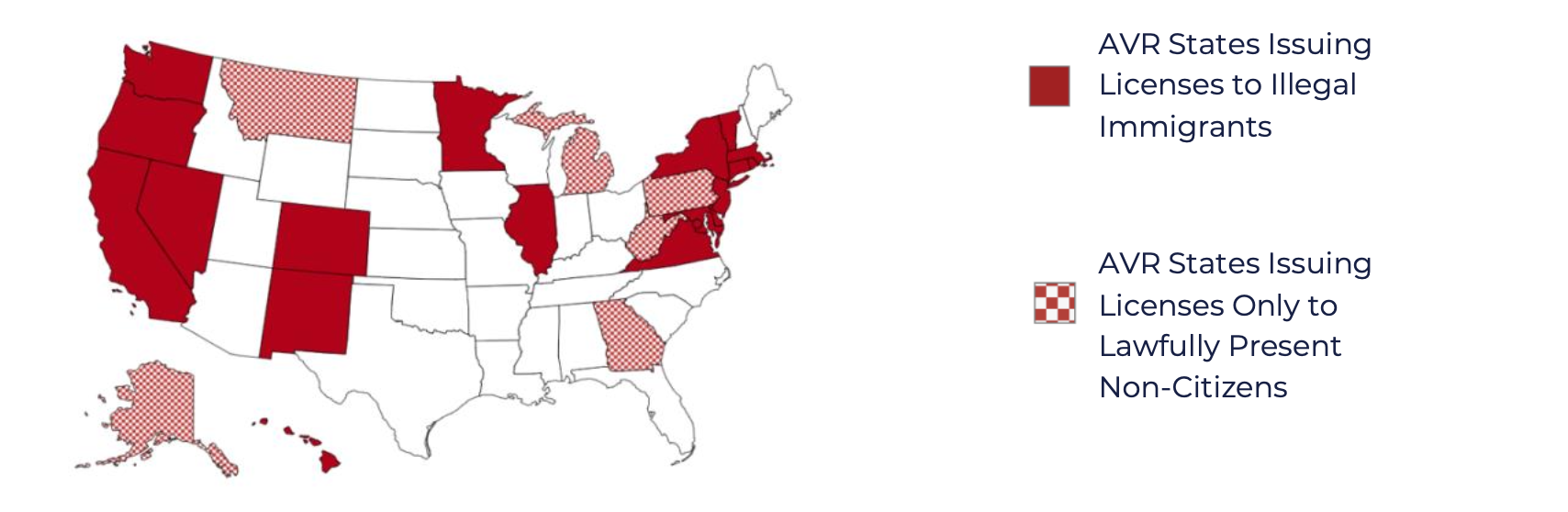
All states issue driver’s licenses to non-citizens. When that practice is combined with Automatic Voter Registration (AVR), under which an applicant for a driver’s license may be simultaneously registered to vote, the result is often the placement of non-citizens on voter rolls. While every state issues driver’s licenses to lawfully present non-citizens, 19 states and Washington, D.C., also issue driver’s licenses to illegal immigrants. The practice of AVR, combined with issuing driver’s licenses to non-citizens, creates serious voter roll vulnerability.
In recent years, the following states investigated this issue and found non-citizens present on their voter rolls:
| State | State | State |
|---|---|---|
| Alabama | Florida | Georgia |
| Idaho | Indiana | Louisiana |
| Michigan | Montana | Ohio |
| Tennessee | Texas | Utah |
| Virginia |
Claims that non-citizens do not vote or are not present on voter rolls are simply false. Most of the above-listed states also found, upon investigation, that non-citizens had actually voted in previous elections. Thousands of non-citizens have been identified and removed from voter rolls across the United States. Efforts to improve transparency in voter rolls and require documentary proof of citizenship when registering to vote are necessary because American citizens should decide American elections.
Policy Solutions
- State policymakers should protect voters by passing legislation requiring proof of citizenship to vote, implementing audit requirements to ensure that non-citizens are not on the voter rolls, and providing clear enforcement mechanisms. (See AFPI’s model legislation.)
- Governors should order their Secretary of State and all state agencies to immediately take all necessary steps to ensure that processes are in place to validate U.S. citizenship during the voter registration process and prevent non-citizens from registering to vote. (See AFPI’s model executive order.)