Restoring Civics Education to Revitalize Our Republic
Key Takeaways
« America’s failure to steward its civic inheritance is driving a crisis of civic disintegration.
« This failure is manifested both in what young Americans don’t know—i.e., much about of our nation’s core values and institutions—and in what they do “know”—i.e., divisive, politicized activism masquerading as civic knowledge.
« To recover our shared sense of national purpose and belonging, America must restore civics education, particularly in K-12 schools. Young Americans must be taught what it means to be an American if we expect them to regard their fellow citizens as partners in a shared Republic.
Introduction: America at 250, a Nation Worth Celebrating and Preserving
As the United States approaches its 250th “Semiquincentennial” anniversary, questions of civic virtue are moving to the forefront of the national discussion. The Trump Administration has made unprecedented investments in civics and patriotic education, while simultaneously revitalizing America’s commitment to school choice, apprenticeship programs, and workforce readiness. It is also working to advance a national renewal of civic pride under the banner of a new American History and Civics Education initiative, building on the historic work of the 1776 Commission (Tripkovic, 2025; Arnn et al., 2021).
Unfortunately, in some respects, America at a quarter-millennium is a nation in dire straits. The bonds of affection uniting Americans to one another and to their country have frayed under the weight of a sustained attack on our nation’s founding and values. This degeneration is evident in public polling: a shocking proportion of young Americans reject core American values, despise America’s history and heroes, and regard millions of their fellow citizens as enemies (Chapman, 2025; McHardy, 2025, Schlott, 2024; Harvard, CAPS, Harris, 2023, pp. 56-57).
Without question, declining civic friendship, civic virtue, and civic feeling threaten to undermine the American experiment. This administration’s achievements will matter little if future generations are alienated from their past and from each other. Any desired bright future for the American people—whether an America “made great again” or a “new golden age”—presupposes a shared national story, common purpose, and enduring values.
A Fractured Civic Culture
Much of our nation’s cultural morass stems from a loss of shared understanding and appreciation for America’s intellectual and cultural inheritance. As knowledge of core American institutions and values gave way to ideological indoctrination, civic virtue—including an orientation towards the common good, self-government, and reasoned debate—gave way to a spirit of political division and animosity. This degeneration is evident, for example, in:
- Declining patriotism: Fewer Americans express pride in their nation, and many are unfamiliar with the principles of liberty and self-government (Jones, 2025).
- Declining civic literacy: National studies reveal widespread ignorance of basic facts about the Constitution, the branches of government, and the Bill of Rights (U.S. Chamber of Commerce Foundation, 2024).
- Increasing radicalization: A growing number of young adults embrace identity politics and see their fellow citizens as members of hostile groups, not as partners in a shared republic (Chapman, 2025; PPRI, 2024; Harvard, CAPS, Harris Poll, 2023, pp. 56-57).
- Increasing tolerance for violence: Troublingly, only half (51%) of young Americans aged 18-29 agree that political violence is “never justified” (Montgomery, 2025).
- Declining trust in institutions: Faith in government, higher education, and even the electoral process continues to plummet (Pew Research Center, 2024; Parker, 2025; Public Affairs Council, 2023).
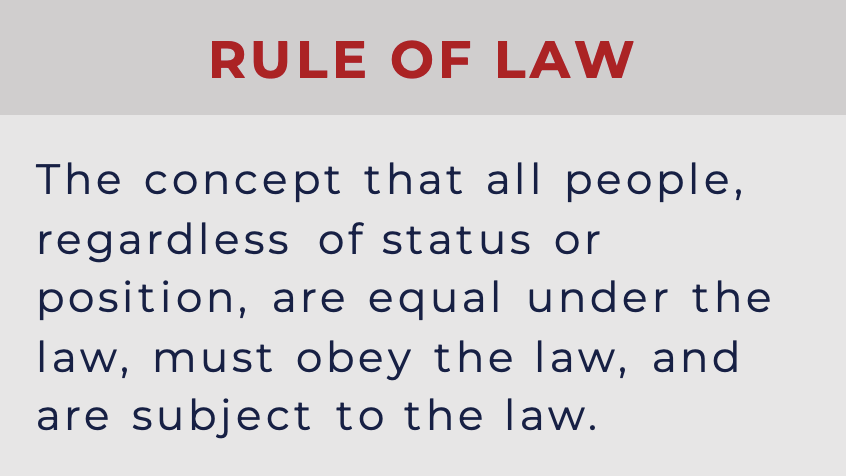
America’s civic national tradition, grounded in the founding documents and the rule of law, has long served as a powerful binding agent for our diverse people. America’s enemies have consequently sought to undermine that faith—but the greater danger arguably now lies in neglect. Much of what passes for “civics education” today is inadequate or, in the case of ideologically captured programs, counterproductive.
The Founders’ Vision for Self-Government
America’s Founders understood that a republican form of government requires civic virtue. John Adams expressed this understanding when he reflected that, “Our Constitution was made only for a moral and religious People. It is wholly inadequate to the government of any other” (Adams, 1798). They envisioned citizens who were not only free but educated in the principles of liberty, duty, and self-restraint—capable of governing themselves and preserving the blessings of freedom.
Thomas Jefferson, author of the Declaration of Independence and third president of the United States, championed the idea of an informed and educated citizenry. In his 1818 Report for the University of Virginia, Jefferson outlined his vision for a public and accessible system of education in the United States capable of providing “... every citizen the information he needs...to understand his duties to his neighbors and country...(and) to know his rights…” (Jefferson, 1818). This statement remains a foundational expression of American civic education, affirming that a free society cannot endure without knowledgeable and virtuous citizens.
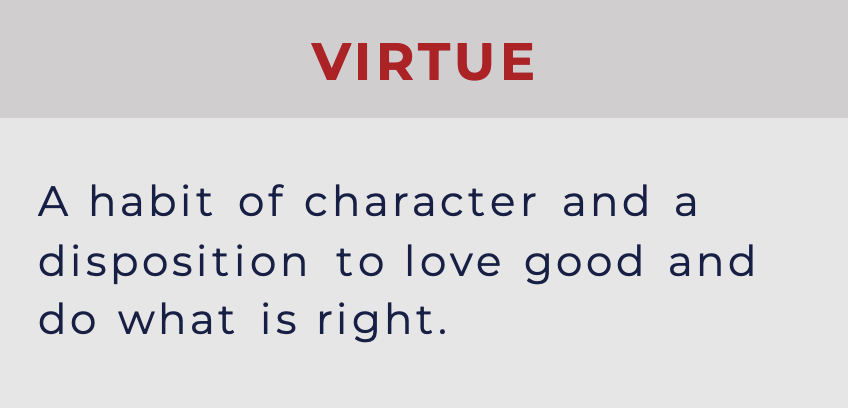
At the same time, the American Founders believed that teaching civic virtue—habits of self-restraint, honesty, industry, courage, public-spiritedness, and respect for the rights of others—was good not only for the nation but for the citizens of that nation. They believed the cultivation of these virtues would enable individuals to achieve both true happiness and lasting personal independence in a free society. This focus on the development of virtue through education stands in direct contrast to the narrative of victimhood, which suggests to children that they can never succeed because of systemic racism. It inculcates resentment and robs individuals of agency and initiative.
Rebuilding Civic Virtue and National Identity
The restoration of civic virtue and national identity must begin where it has long been neglected: in the classroom. In particular, it must occur in K-12 classrooms. To be sure, we must also revitalize civics education in our nation’s colleges and universities (Robinson, 2025); however, the impact of postsecondary civics education is likely to be attenuated by the coming end of “college-for-all” paradigm (U.S. Departments of Labor, Commerce, and Education, 2025). As post-secondary education shifts towards a greater emphasis on short-term programs tied to labor market needs, civics instruction at the primary and secondary education levels will increasingly carry the weight of imparting civic knowledge and our nation’s traditions and values to the next generation.
Renewing American civics is about improving education—but it is also much more than this. Renewing civics is about renewing our nation. To preserve the Republic, schools must teach young Americans that freedom is not merely inherited but also earned through knowledge, discipline, and love of country.
This report sets forth a vision to restore American unity and civic friendship through a revitalized program of civics education in K-12 schools. The goal is not to indoctrinate young people into any ideology, but to infuse young Americans with a new understanding of and passion for what they share: the history, principles, and values that define our nation.
A foundational premise of this report is that equipping the next generation with a deeper understanding of America’s institutions and values offers the surest path toward overcoming our present divisions. Civic hostility and polarization need not be permanent conditions; they can be healed through knowledge, shared purpose, and renewed appreciation for the American experiment.
A revitalized program of civics education can:
- Restore a sense of shared national belonging and common purpose.
- Rebuild mutual understanding by helping Americans with divergent views see one another as members of a common national family.
- Promote inclusion by strengthening America’s historic civic-national tradition rooted in liberty and equality.
- Inspire young Americans with a renewed sense of hope and confidence in the nation’s future.
Section 2: E Uno Plures (“Out of One, Many”)
There are signs everywhere that America’s social fabric is rending. Tragically, many Americans now see millions of their fellow citizens as belonging to a hostile opposing political “tribe.” The issue is not merely political polarization—i.e., ideological “leftward” movement among Democrats and “rightward” movement among Republicans (Abramowitz & Saunders, 2008). Nor is the problem one of partisan “sorting”—the migration of liberals into the Democratic Party and conservatives into the Republican Party (Fiorina, 2016). To be sure, these often-conflated phenomena contribute to the heightened atmosphere of partisan/ideological animosity; however, what we are enduring today is entirely distinct.
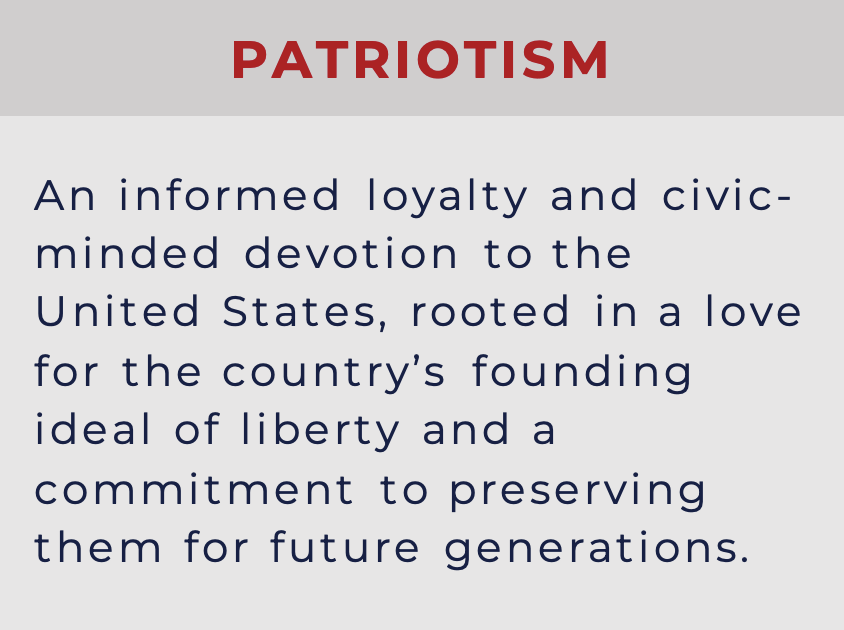
It is possible for friends and family to wildly disagree with one another without losing their bonds of affection and loyalty. The same is true for citizens of a common nation—after all, a nation is an extension of the tribe, which is an extension of the family. But what are the bonds of affection and loyalty for our national family?
Historically, Americans have leaned heavily on a shared commitment to founding values, including liberty, equality under law, and popular sovereignty (Myrdal, 1944). However, having failed to maintain this understanding, Americans are on the cusp of losing any sense of shared common purpose. Indeed, there are signs that many are now losing their very humanity. Consider the following recent developments:
- In October of 2025, on the eve of Virginia’s statewide elections, disturbing text messages emerged in which Jay Jones—a leading candidate for Attorney General—wished death upon his political rival, and described his desire to urinate on his rival’s grave and to see his rival’s wife holding her dead children (Jones accused his opponent and his wife of “breeding little fascists”). After these messages went public, no prominent elected leader in Jones’ party called on him to resign from the race (Knowles & Schneider, 2025). Indeed, a former President of the United States subsequently campaigned for Jones publicly (Creitz, 2025). Even more shocking: Jones went on to be elected Attorney General by Virginia voters.
- Prominent conservative media figure and free speech activist Charlie Kirk was assassinated on September 10, 2025. Kirk’s assassination prompted tens of thousands of celebratory posts from social media users (Buttons, 2025). As Kirk’s family and supporters grieved his loss, major public figures in media and politics smeared his legacy. At least one prominent podcaster with over half a million followers, mocked Kirk’s grieving widow (Zilber, 2025).
- President Trump survived two assassination attempts in 2024. Hysterical political rhetoric likening the President to Adolf Hitler and describing him as an existential threat to democracy likely contributed to the attempts on his life. Yet, even after the President was nearly murdered, leading political and media figures continued to employ this same rhetoric (Harris, 2024; Lim, 2024; McGinley, 2024; Key, 2024).
- On December 4, 2024, UnitedHealthcare CEO Brian Thompson was shot and killed in on the streets of New York City. As celebrities and pop stars swooned over the alleged young assassin’s appearance, journalists and social media users defended the assassination (Donnellan, 2024; Nesi, 2025; NCRI, 2024). As of November 10, 2025, alleged murderer Luigi Mangione’s legal defense fund had raised $1.4 million (GiveSendGo, n.d.). In California, a new ballot measure titled “The Luigi Mangione Access to Health Care Act” unambiguously seeks to capitalize upon Mangione’s positive persona in certain circles (Keane, 2025).
In response to developments like these, several researchers at Rutgers University’s Network Contagion Research Institute (NCRI) coined the term “assassination culture” to describe widespread and growing support for violence, including assassination by “younger, highly online, and ideologically left-aligned” individuals (NCRI, 2025, p. 1). The authors conclude that these developments threaten political stability and public safety. Among their findings, the proportion of respondents who expressed some level of justification for murdering public figures reached:
- 31% among respondents overall, and 50% of left-of-center respondents in the case of Elon Musk.
- 38% among respondents overall, and 56% of left-of-center respondents in the case of President Trump.
Justification for political assassination was tightly correlated with Left-Wing Authoritarianism (LWA), a worldview “characterized by moral absolutism, punitive attitudes toward ideological opponents, and a willingness to use coercion for progressive aims” (NCRI, 2025, p. 5). Right-of-center respondents were comparatively less likely to support assassination in either case (14.3% for Elon Musk and 20.3% for President Trump). However, this is an unsurprising finding, given that both public figures are associated with the political right, and given that the animating ideology (LWA) is associated with the political left. This same finding—asymmetric left-of-center support for political violence—has been shown elsewhere as well (Montgomery, 2025).
While it certainly matters where in the political spectrum violent sentiments are emerging and taking root, widespread support for political violence should be cause for alarm for Americans of every political and ideological stripe. To support political violence is to reject a foundational premise of American political culture: the idea that policy differences are settled with ballots rather than with bullets.
Unfortunately, Americans—and young Americans, in particular—are increasingly rejecting core American values. For example, on far too many American campuses today, free speech has slipped from being a bedrock principle to a privilege granted only to those with the “correct” views. Campus radicals have normalized the noxious position that disfavored speech is akin to “violence,” thereby turning honest disagreement into something suspect and even dangerous (Nordstrom, 2022; Perisic, 2017; Urbanski, 2017). The consequences are obvious: conservative and heterodox voices are shouted down, smeared, or buried in layers of bureaucratic “safety” protocols and bias-response procedures (Jaschik, 2023; Quinn, 2023; Ray, 2016). Last year’s protests made this unmistakably clear. Students who once preached tolerance now spend their days policing and punishing viewpoints they cannot refute. A healthy republic cannot survive if its next generation of leaders fear open inquiry more than they value the pursuit of truth.
Likewise, the growth of socialism among young Americans is more than a “quirky” intellectual fad: it is an indication of how little our institutions are successfully passing on our nation’s traditions of liberty. Socialism, stripped of its romantic packaging, demands that individuals yield their autonomy and dignity to the state. It weakens property rights, concentrates power and wealth in the hands of a political elite, and flattens the very freedoms our Founders fought to secure (Hayek, 2007).
Yet on American campuses, socialism is marketed like a lifestyle accessory—an aesthetic divorced from the reality of what it has produced everywhere it has been tried. The dark reality of socialism is economic decay, political repression, and pervasive social inequality between those connected to the party-state on the one hand and ordinary people on the other (Courtois et al., 1999). The fact that so many college-educated Americans casually embrace socialism is proof that our universities have failed at the most basic task of a free society: teaching the responsibilities that come with citizenship.
Growing antisemitism and racial animosity should alarm anyone who cares about the health of the American Republic. Last year’s campus protests made this crisis impossible to ignore: students ripped down posters of kidnapped civilians, chanted in support of terrorist groups, and harassed Jewish classmates under the banner of “liberation” (Blair, 2025; Dev, 2023; Hicks, 2023; Rozner, 2023). Certain malign actors and poisonous online discourse are contributing to the normalization of this and other forms of racial and ethnic hatred that contradict our nation’s foundational commitment to equality and individualism (Costello et al., 2023; Frankel, 2025). The labels differ, but these worldviews similarly recycle toxic ancient hatreds into the political mainstream under a fresh set of slogans.
Given the growing rejection of core American values among America’s youth, it is unsurprising that much of “Gen Z” rejects America itself. For decades—but especially given the widespread use of Howard Zinn’s anti-American A People’s History of the United States and Nikole Hannah-Jones' discredited 1619 Project—young Americans have been enmeshed in a kind of toxic “anti-civics.” Having been taught in their classrooms and by their wider culture to view their nation through the prism of intersecting vectors of oppression, many young Americans no longer see the American experiment as a noble endeavor and American history as a story of self-correction and progress towards a more perfect union.
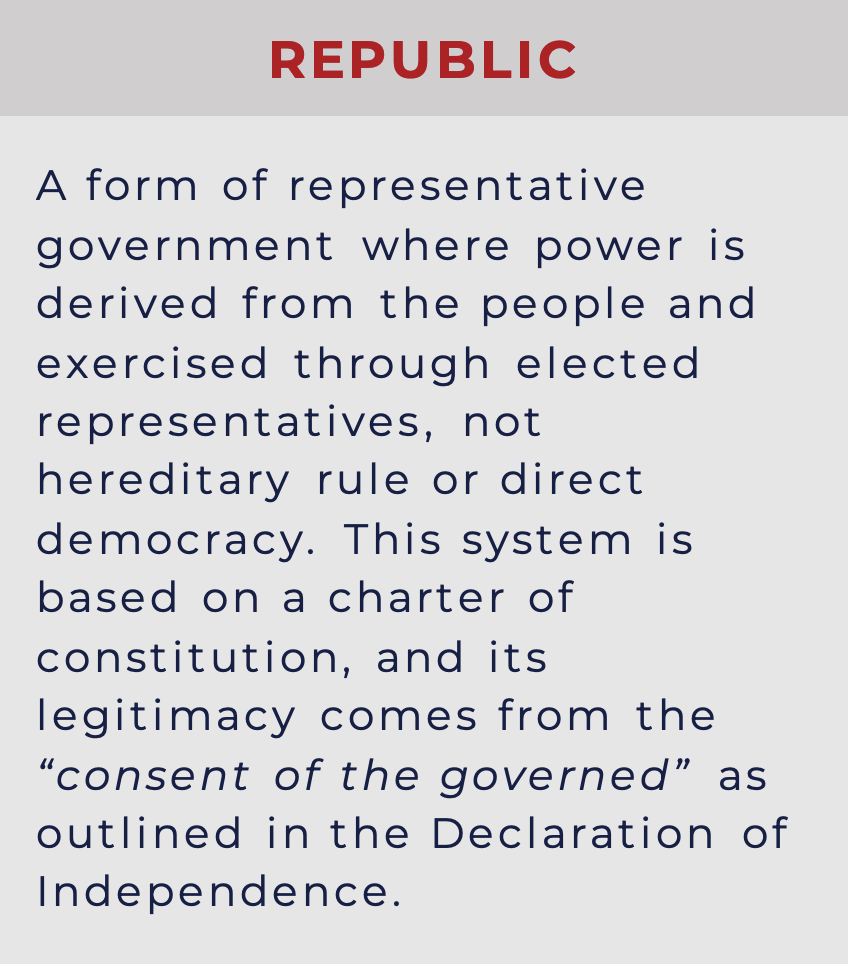
This new anti-civics—sometimes referred to as “Critical Race Theory,” “the successor ideology,” or simply “woke”—is not confined to the classroom. It shapes how a generation sees its role in the country. If young Americans are taught that their nation’s founding principles are illegitimate, they will inexorably abandon the duties that accompany citizenship. A republican form of government, such as ours, is predicated on the idea that sovereignty resides in the people (Madison, 1788). Such a system cannot endure if its own citizens believe that it is not worth defending (Swain & Schorr, 2021; Sullivan, 2022).
Public opinion surveys reflect sharp drops in national pride, especially among younger Americans (Jones, 2025). Patriotism isn’t blind cheerleading; rather, it is a moral posture characterized by stewardship, sacrifice, and a sense of duty to one’s nation. When those instincts fade, trust erodes, polarization calcifies, and the shared identity that keeps a diverse country together unravels. The solution isn’t to manufacture patriotism by decree but to rebuild the civic and historical understanding that allows genuine patriotism to grow on its own.
The Civic Illiteracy Crisis
America’s Founding Fathers understood that government structures, institutions, and laws were necessary but not sufficient to the task of sustaining our new nation. The constitutional order they designed—a democratic Republic—presupposed both civic knowledge and civic virtue. In practice, this meant that citizens would need to be taught our nation’s institutions and values. As Thomas Jefferson explained, “If a nation expects to be ignorant [and] free, in a state of civilization, it expects what never was [and] never will be” (Jefferson, 1816).
Jefferson’s words, written more than two centuries ago, seem increasingly urgent given recent shocking declines in civic knowledge. Young Americans no longer possess a working understanding of how our government functions and of their role, as citizens, in the political process. Civic illiteracy threatens the viability of our system of government, including the protections it provides for Americans’ rights and liberties.
The National Assessment of Educational Progress (NAEP) measures core, nationwide markers of academic achievement for 4th, 8th, and 12th grade students. Its several subject areas include reading, mathematics, science, writing, the arts, civics, geography, economics, U.S. history, and technology and engineering literacy. As part of the Every Student Succeeds Act (ESSA), states that receive Title I funding are required to report state-level results for the reading and mathematics assessments (S.1177, 2015). The results of these assessments are collectively known as “The Nation’s Report Card” (National Center for Education Statistics, 2025).
While states are not required to report state-level results for the civics assessments, NAEP still provides the best nationally representative measure of 8th grade students’ civic knowledge and skills. The assessment has been administered roughly every four years since 1998, most recently in 2022 (National Center for Education Statistics, 2025).
In the most recent 2022 fielding, average scores for 8th graders declined three points in comparison to the prior period, 2018 (National Center for Education Statistics, 2023). This was the first recorded drop since NAEP civics assessments began in 1998. Of particular concern, only 23% of students scored at or above the NAEP “proficient” level, and nearly one-third performed below the NAEP “basic” level. According to NAEP achievement standards, students below “basic” are unlikely to be able to describe the structure and function of the U.S. government or core American principles, such as individual rights, federalism, democracy, or checks and balance (National Center for Education Statistics, 2004).1
Surveys of test-takers suggest declining achievement on civics assessments may be linked to inadequate civics instruction. For example, less than half (49%) of students reported taking a course on civics or the U.S. government in 8th grade. Further, only 29% of students reported having a teacher whose primary responsibilities included teaching civics and U.S. government. When students do not receive appropriate instruction in American civic values and history, they are less likely to engage in the democratic process or to appreciate their responsibilities as citizens. For example, only 27% of those students who scored in the lowest quartile could explain why it was important for individuals to participate in the political process (much lower than the 66% of students from the highest quartile; National Center for Education Statistics, 2023).
The damage caused by inadequate middle and high school civics instruction becomes evident as young people reach adulthood. In a survey of 18–24-year-old Americans, the Institute for Citizens & Scholars uncovered evidence that Gen Z is disconnecting from the political process en masse. For example, only two-thirds of young adults surveyed were registered to vote prior to the most recent election. Of those registered to vote, less than half (48%) intended to vote in the 2024 election (Institute for Citizens & Scholars, 2023). Not surprisingly, this group also demonstrated a severe lack of basic civic knowledge with 40% being able to only answer one out of four civics questions correctly.
This same survey found that young Americans lack faith in our system of government. Overall, only 35% were “satisfied,” and fewer still (27%) were “optimistic” with democracy (Institute for Citizens & Scholars, 2023). Though disappointing, this finding is hardly surprising. After all, how can young Americans be expected to appreciate institutions they barely understand?
If America’s schools are failing to preserve civic literacy, perhaps older generations (e.g., Generation X and Baby Boomers) can step in and fill this void? Unfortunately, recent national surveys suggest this possibility is remote. This year, a survey conducted by the U.S. Chamber Foundation uncovered a sizable disconnect between average adult citizens’ perceived and actual understandings of American institutions. Amongst those adults surveyed, three in four (74%) were “confident that they could explain how government works to someone from another country,” however, six in ten (58%) of those same respondents failed to pass a basic civics test (U.S. Chamber of Commerce Foundation, 2025).
America’s degraded civic culture is intimately connected to diminished civic knowledge. It is a simple reality that, in our young “proposition nation,” the ties that bind us together must be taught. The loss of shared understanding of foundational civic principles is causing the fabric that binds our nation together to unravel—indeed, the U.S. Chamber of Commerce’s survey reveals that Americans recognize political division in the country (84%), and that this division is causing strains in their personal relationships (27%; U.S. Chamber of Commerce Foundation, 2025).
Returning to the study by the Institute for Citizens & Scholars, politically disengaged members of Gen Z (i.e., those who “do not identify politically in any way”) offer a window into America’s future if we fail to arrest the decline of civics instructions in our schools. Of this group:
- Only six in ten (61%) expressed pride in being American.
- Only one in four planned to vote (27%).
- Only one in four expressed satisfaction with democracy (26%).
- Only one in eight (13%) expressed optimism about the future of democracy.
- Only half (56%) oppose violence.
- Only half feel their vote matters (50%; Institute for Citizens & Scholars, 2023).
Americans must reverse the precipitous decline in civic literacy if we are to preserve the Republic. There is little hope for the future of our democratic Republic if citizens lack a shared understanding of our history, values, and civic responsibilities. Meaningful attention must be directed toward revitalizing civics education at every level—primary, secondary, and postsecondary alike. If we do not, we risk proving Jefferson right, that a people cannot remain both “ignorant and free.”
Section 3: Civics Education Promotes Civic Virtue and National Unity
One tragic consequence of the decline of civics education is that many Americans have come to regard “civic virtue” as an antiquated idea—if they are familiar with it at all. By contrast, America’s Founders regarded civic virtue as sine qua non: an essential quality absent which our form of government could not function. They were correct. Civic virtue is among the most important concepts—more accurately, series of practices—that a proper education in American civics can impart to young Americans. The health of our Republic is intrinsically linked to the cultivation and preservation of civic virtue in our nation.
A quality civics education is also essential to the formation of a shared sense of national belonging. By learning about our country, history, and values, young Americans develop a shared identity—a kind of national “ingroup.” The United States is a young and diverse country—two qualities that, by themselves, work against national unity. This point was addressed by no less than America’s first president in his Farewell Address to a much younger (albeit also less diverse) nation. Washington warned of the dangers of faction, exhorting his countrymen to,
Cherish a cordial, habitual, and immovable attachment to [our country]; accustoming yourselves to think and speak of it as of the palladium of your political safety and prosperity; watching for its preservation with jealous anxiety. (Washington, 1796)
No one is born with this kind of love of country, or with the linked sense of shared identity and purpose. It must be taught.
What is Civic Virtue?
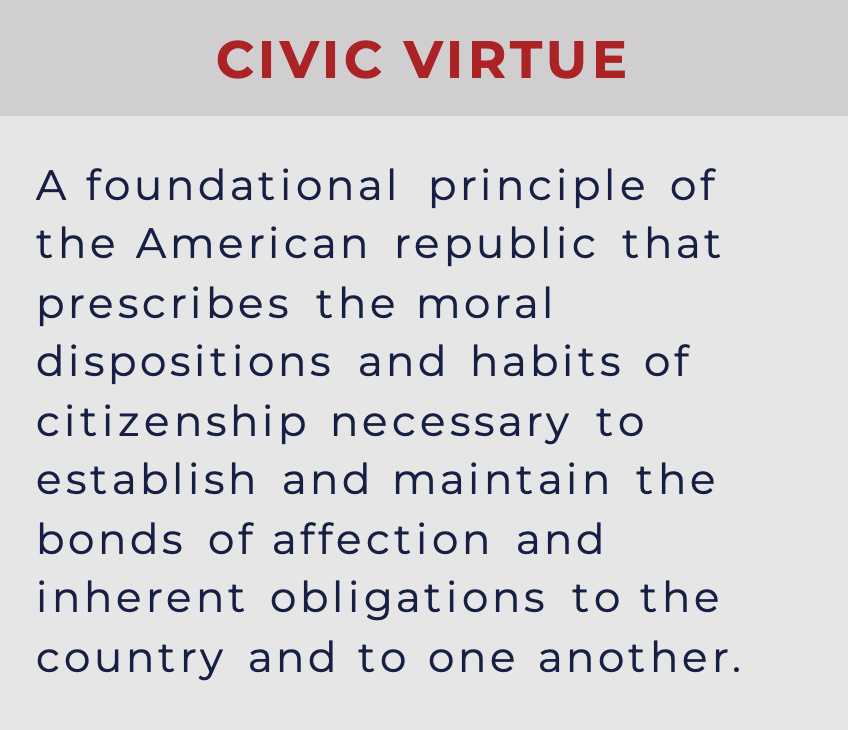
Civic virtue describes the moral dispositions and habits of citizenship needed to establish and maintain the bonds of affection and inherent obligations to country and to one another. It includes such things as public spiritedness, honesty, respect for the rule of law, self-restraint and moderation, justice and fairness, courage, loyalty, piety, diligence, prudence, frugality, participation, and tolerance. Examples of civic virtue in practice include:
- Military service.
- Charitable volunteering or donating.
- Participation in the democratic process.
- Respectful engagement in public debate.
- Reporting crimes and abuses of authority.
- Obeying laws.
- Respecting national customs and traditions.
- Helping neighbors and community members.
Civic virtue concerns public ethics or the ethics of citizenship. As such, it may be distinguished from moral virtue, or ethical personal behavior. Yet the two virtues overlap substantially. For example, one can speak of military service or charitable works in terms of public rather than private virtues, but the qualities in question—honor, courage, loyalty, responsibility, generosity, and compassion—may be counted in either category.
America’s Founding Fathers frequently spoke of the two virtues together and saw both as necessary to the survival of our Republic. For example:
- John Adams wrote, “Public Virtue cannot exist in a Nation without private, and public Virtue is the only Foundation of Republics” (Adams, 1776a). He later wrote, “Our constitution was made only for a moral and religious people. It is wholly inadequate to the government of any other” (Adams, 1798).
- Benjamin Franklin agreed, stating, “Only a virtuous people are capable of freedom. As nations become corrupt and vicious, they have more need of masters” (Franklin, 1904, pp. 318-319).
- In his Inaugural Address, George Washington argued for laying “[the] foundation of our national policy… in the pure and immutable principles of private morality,” reasoning that “[there] is no truth more thoroughly established than that there exists… an indissoluble union between virtue and happiness” (Washington, 1789).
- Returning to this theme in his Farewell Address, Washington states, “Of all the dispositions and habits which lead to political prosperity, religion and morality are indispensable supports… And let us with caution indulge the supposition that morality can be maintained without religion…reason and experience both forbid us to expect that national morality can prevail in exclusion of religious principle” (Washington, 1796).
The complementary nature of civic and moral virtue is further developed by the 20th century philosopher Russel Kirk. In The Roots of American Order (1991), Kirk describes American society as consisting of two “orders,” one private and one public. Here “order” is conceived of as a “systematic and harmonious arrangement—whether in one’s own character or in the commonwealth” (Kirk, 1991, p. 5). In Kirk’s account, the civil social order is concerned with maintaining the nation, state, and society, while the moral order maintains the condition of individuals’ souls, including their moral character, moral imaginations (perception of the good), and habits (Kirk, 1991, pp. 6, 30-38, 79-84; 1985, p. 8).
Kirk describes the two orders as intimately linked, with both reflecting “a transcendent order, or body of natural law, which rules society as well as conscience” (Kirk, 1985, p. 8). Even the term “civic virtue” testifies to this connection: “virtue” describes a prescription written on the hearts of human beings by their Creator (Aquinas, ST I-II, q. 93, a. 1, co.).[1] For Kirk, civic virtue emerges from order in a republic in much the same way as Plato and Aristotle describe virtue as emerging from a justly ordered soul (Plato, Republic, 4.444d-e; Aristotle, Nic. Eth., 1098a pp. 14-15). Civic virtue is informed by a faith in what Kirk calls “the old prescription”: a disposition towards wisdom and prudent behavior, all of which enables citizens to contribute to the common good and thereby, sustain a free, just, and orderly society (Kirk, 1985, p. 36-7, 64).
The Necessity of Civic Virtue in a Republic
The very nature of republican government makes civic virtue an indispensable quality. This is because in such systems, it is the habits, behaviors, and values of the people that ultimately direct the ship of state. The word “republic” comes from the Latin res publica, meaning “the thing of the people.” This “thing” (res) is the object of civic virtue—the common good pursued by virtuous citizens. In the absence of civic virtue, the American people (publica) are left without a common purpose or a reason for coming together as a people (nation). This is only the first crisis for republican government when civic virtue declines.
The second crisis emerges from the vesting of political power in the people’s elected representatives. Under monarchy, threats to liberty may arise from individual tyrants; however, in republics, it is the voting majority—what Kirk referred to as “King Numbers”—who sometimes assume a tyrannical posture (Kirk, 1985, p. 165). This fear preoccupied our Founders, causing them to separate and check majority power (Adams, 1794, vol. 3, pp. 291-293, 310; Federalist Papers, 1787, No. 10); however, it was perhaps most powerfully explored a generation later by Alexis de Tocqueville who warned that the unchecked force of public opinion might silence opposition and even override the consciences of individual citizens (Tocqueville, 2010, vol. 2, pp. 418-419).
Alongside the structural guardrails provided by the U.S. constitutional system—divided powers, checks and balances, individual rights and federalism—and by a robust civil society,[2] civic virtue helps to counteract republics’ natural tendencies to drift towards majority tyranny. It achieves this by ensuring that ordinary citizens possess the qualities needed for self-governance. For example,
- Respect for the rule of law should mitigate against toleration of lawlessness by fellow citizens or by the government, such as abdicating law enforcement duties or persecuting political rivals.
- Prudence and frugality should mitigate against irresponsible public spending.
- Loyalty should mitigate against subordinating the interests of the American people to foreign nationals, interest groups, or abstractions.
- Piety demands public reverence for national symbols, such as respectfully standing for the pledge of allegiance.
- Tolerance, self-restraint and moderation should prevent the censoring, de-banking, and harassment of political opponents (to say nothing of violence).
Once again, America’s Founding Fathers were emphatic, going so far as to address the importance of practicing specific civic virtues:
- George Mason, a forgotten Founding Father, wrote in the Virginia Declaration of Rights of 1776, “No free government, or the blessings of liberty, can be preserved to any people but by a firm adherence to justice, moderation, temperance, frugality, and virtue and by frequent recurrence to fundamental principles” (Mason, 1776).
- In his Autobiography, Benjamin Franklin discusses the importance of temperance, silence, order, resolution, frugality, industry, sincerity, justice, moderation, cleanliness, tranquility, chastity, and humility (Franklin, 1784).
- John Adams extols frugality, sobriety, industry, justice, and benevolence (Adams, 1776b; 1787).
- George Washington lists kindness, humility, decorum, reason, discretion, piety, and honesty among his 110 “rules of civility” (Washington, 1745).
In the Founders’ vision, these qualities would be imparted and sustained largely through education. One could argue (as many Founders did) that popular government even presupposes widespread education, insofar as it disperses decision making power throughout the population to a greater degree than other forms of government (Jefferson, 1786, 1818; Adams, 1765). As James Madison wrote, “A popular government, without popular information, or the means of acquiring it, is but a prologue to a farce or a tragedy” (1812). Yet there can be no doubt that the Founders specifically endorsed the idea of using education to cultivate civic virtues and their associated moral virtues for the purpose of sustaining republican government (Pangle & Pangle, 1993; West, 2017, Part II).
Forging a Common Identity and Overcoming Division
Alongside promoting civic virtue, a quality civics education helps to sustain a republic by cultivating a shared sense of collective identity in its citizens. Evidence to this effect comes from research addressing social identity. Social identity theory holds that people have strong natural inclinations to differentiate “ingroups” and “outgroups” (i.e., “social categorization”), and to link their own esteem to perceptions of the status of their ingroup (Tajfel & Turner, 1979). The lion’s share of social identity research concerns the effects of social categorization on inter-group preference or prejudice (Tajfel, 1978; Brewer, 1979; Hogg & Abrams, 1988; Mullen et al., 1992). For example, in experimental settings, subjects tend to favor other assigned ingroup members even when the criteria by which they are assigned are trivial or random (Billig & Tajfel, 1973; Rabbie, 1982).
Relatively less attention has been paid to the beneficial effects of social categorization, namely, its tendency to reduce prejudice towards other ingroup members. These effects likewise result from the process of social categorization, which tends to exaggerate both inter-group differences and intra-group similarities (Tajfel, 1969; Brewer, 1979; Harnad, 2017, pp. 14-16). In practice, this means that if one were to take a population divided into distinct groups and then superimpose a common shared identity upon it, the result would be a diminishing of prejudice. This effect has been observed repeatedly in experimental settings and statistically using observational data (Gaertner et al., 1993; Schorr, 2020).
In a sense, this finding should be obvious—after all, our nation’s motto is E Pluribus Unum, out of many, one. American history testifies that people from different backgrounds and cultures can successfully come together to adopt a new, shared collective identity. The ideal of the “melting pot” evokes the image of once-salient ethnic distinctions diminishing (melting away) over time as newly formed Americans embrace their common “ingroup” and thereby grow more culturally similar to one another.
Along with assimilation, old prejudices fall by the wayside. Today, most Americans would be shocked to learn just how pervasive anti-Catholic sentiments were in the colonial era.[3] By the turn of the century, such views were negligible (Pew Research Center, 2004, p.12). America has likewise made tremendous progress in attenuating racial prejudice. For example, survey research shows enormous declines in anti-Black prejudice among White Americans (Healey, 2011, p.206). Remarkably, 94% of Americans now approve of marriages between White and Black Americans, up from just 4% in 1958 (McCarthy, 2021).
No doubt, past generations would be astonished to learn that Americans are now far more likely (9.5 times) to oppose cross-party marriages (38%) than interracial marriage (Opzoomer, 2020). Unfortunately, this finding also points to the current challenge. Today, partisan/ideological prejudices—sometimes called “affective polarization”—threatens national integrity (Iyengar et al., 2019).
These divisions, even more than ethnic and religious divisions, evoke Washington’s warning of the dangers of faction. Fortunately, they also point to the solution to our crisis: rebuilding our common national “ingroup” by recommitting ourselves to what unites us as a country. By better informing young Americans of their civic inheritance, a quality civics education would help to bolster identification with and affinity for our nation. Together, this felt sense of connection with other Americans (nationalism) and affinity for the sources of our common identity (patriotism) would work to counter the intra-group enmity (factionalism) that pervades our country today.
This is not to suggest that American identity is reducible to founding values. Americans are a people with a history and distinct customs and traditions. We are not merely “a proposition nation,” but we are also a proposition nation. Our national ingroup absorbs new members and maintains its shared identity, in part, by teaching the next generation about our nation’s values, history, and how our system of government works. This process also includes imparting reverence for our shared symbols (e.g., the American flag), heroes (e.g., President Washington, Frederick Douglas), and traditions (e.g., the Pledge of Allegiance).
A final note on identity formation: civics instruction should occur in postsecondary institutions, as well as in K-12 schools. Several excellent legislative proposals address this challenge, including the REACH Act in South Carolina and the General Education Act in Utah (Broggi, 2025; Kurtz, 2025). Fourteen states currently require civics education as a college graduation requirement (Watkins, 2025). However, the need for civics instruction is most urgent at the K-12 level for the simple reason that not all young Americans pursue post-secondary education. As increasing numbers of young Americans forego traditional college paths in favor of short-term workforce-oriented programs that may not have robust general education requirements, or go directly into the workforce after high school, it will become increasingly necessary to invest in civics education at the primary and secondary levels. This means that, left unaddressed, the current crisis in civics education likely foreshadows a worsening crisis in the coming years.
Given this, what should K-12 civics education look like? As it turns out, the states are answering this question in very different ways.
Section 4: Two Starkly Different Model Approaches to Civics Education in the States
Over the past 15 years, there has been a growing divide over the very purpose of civics education. Should civics instruction be primarily knowledge-based, or should it be geared towards mobilizing political action? And what exactly should students know about the ideas and ideals that motivated the Founding Fathers and subsequent generations of Americans? Indeed, should students be required to demonstrate that they know the basics of how our government works and our duties and responsibilities as citizens at all before they graduate high school?
In 2011, the U.S. Department of Education published a report titled “A Crucible Moment: College Learning and Democracy’s Future” (Global Perspectives Institute, 2011). While primarily geared to a postsecondary audience, the report called on teacher preparation programs, state policymakers, and K-12 school districts to redefine the basis of a proper civics education. It declared that the traditional definition of civics education, “that stressed familiarity with the various branches of government and acquaintance with basic information about U.S. history” is “no longer nearly enough” (p. 11). Rather, students need to understand “global contexts” and that “full competencies in civic learning cannot be learned only by studying books” but also required “hands-on, face-to-face, active engagement” in political causes. It further called on leaders at all levels to re-orient civics toward a more politicized vision stressing “collective public action” and “democratic justice” (p. 11).
This federal report came on the heels of the 2010 launch of the National Action Civics Collaborative (NACC), a coalition that “seeks to re-define the way civics is understood and practiced both in schools and in out of school time activities” (Lindsay, 2020). Rather than defining civics as a “content area,” the NACC suggested that “what matters” are “guiding commitments” to “action, especially collective action” and to “youth voice and opinions” (p. 5). According to a 2019 report from Education Week, “action civics” has the “lofty goal [of] revitaliz[ing] democracy with a new generation of informed, engaged citizens.” Its proponents sought to supplant depoliticized “service learning” with instruction aimed at solving societal problems (Gewertz, 2019).
At first blush, the notion of empowering students sounds like a positive good—even if sacrificing basic civic literacy is clearly not. In practice, however, action civics encourages students to participate in political protests and to volunteer for projects that promote progressive causes (Randall, 2017). Stated differently, action civics replaces nonpolitical, knowledge-based instruction with leftwing political activism.
Leading action civics proponents at Generation Citizen dispute this characterization, arguing action civics seeks simply “to ensure that young people understand how government operates and why it is relevant to their lives” (Curran & Warren, 2020). To settle this debate, Texas Public Policy Foundation’s Thomas Lindsay investigated the websites of Generation Citizen and other allied groups to evaluate the programs in question. Lindsay concluded that “even a cursory glance at this list of 27 projects reveals a progressive bias in the assumptions underlying many of the projects listed above” (Lindsay, 2020, p. 14). Lindsay’s analysis uncovered essentially zero recommended projects that could reasonably be deemed conservative or Republican-aligned. By contrast, the progressive political implications of action civics were readily apparent. For example, students were recommended to advocate for three excused absence days to participate in political protest and to engage in exploring “power analysis, feminist perspectives, [and] influencing public policies [with a] social justice orientation” (p. 14).
The motivations underlying action civics also appear to run counter to those of America’s Founding Fathers and historic statesman such as Abraham Lincoln. Deriding traditional civics instruction, the NACC states, the “preparation for a democratic life, to the extent that it does is exist, is typically relegated to fact-based, textbook oriented ‘civics’ classes which, research has shown, have little to no effect on students” (p. 5). What research has shown this? On that front, the NACC is silent. However, the contrary view—that civic knowledge supports civic virtue and self-government—finds support in the writings and public statements of many of America’s Founding Fathers (see Section 3), as well as in the writings of Plato, Aristotle, Cicero, Acquinas, Machiavelli, Locke, Tocqueville, Arendt, and Oakeshott, to name a few.
It further bears mentioning that America’s Founders were suspicious of untrammeled democracy. Their fact-intensive study of history showed them the dangers of a passionately inflamed yet ill-informed people. A half-century later, in his Lyceum Address—which should be required reading in all American high schools—Abraham Lincoln predicted that a loss of reverence for the Constitution and the American principles of government could lead our nation to degenerate to mobocratic rule (Lincoln, 1838). As Lindsay notes, “critics of Action Civics fear that its intended remedy for our civic illiteracy is more virulent than the disease, producing the worst of both worlds: Civic ignorance married to a false sense of political entitlement—in short, ‘mobocratic’ rule” (Lindsay, 2020, p. 4).
Utilizing Civics to Promote Ideology and Activism
In the decade that followed the publication of “A Crucible Moment,” many K-12 school districts and some entire states shifted the focus of civics education away from promoting historical and civic knowledge and instead toward political activism with an unmistakable left-wing slant. For example, Minnesota repealed a longstanding civics exam high school graduation requirement in 2023 (Wigfall, 2023). One year later, the Minnesota state board of education overhauled its statewide social studies standards to include a steady strand in grades K-12 of “Ethnic Studies” (Minnesota Department of Education, 2025).
These requirements have an unmistakable left-wing ideological tilt. For example, first graders are tasked with identifying “examples of ethnicity, equality, liberation, and systems of power.” Seventh graders are required to examine “the benefits and consequences of power and privilege,” and ninth graders are to study “the construction of racialized hierarchies based on colorism and dominant European and beauty standards.” Students as early as kindergarten are to be taught standards that emphasize
- “Ways of Knowing/Methodologies: Use ethnic and Indigenous studies methods and sources in order to understand the roots of contemporary systems of oppression.”
- “Resistance: Describe how individuals and communities have fought for freedom and liberation against systemic and coordinated exercises of power locally and globally” (Minnesota Department of Education, 2025).
At no grade level are students to be taught inspiring stories about American heroes or major figures from American history. Names like George Washington, Alexander Hamilton, Abraham Lincoln, and Frederick Douglass are entirely absent from Minnesota’s social studies standards.
Illinois leaned into action civics in 2015 by inserting an “informed action” requirement into civics instruction. State law does not mandate a standalone civics course, but does mandate that civics be taught for one semester. During that semester, civics must include a discussion of “current and controversial issues,” and “service-learning” which must be guided by the Illinois Learning Standards (Illinois State Board of Education, 2019). Those standards tilt the political deck by urging students to take action to promote “equity” and “inclusion.”
In 2018, Massachusetts passed a first-of-its-kind law requiring all students to participate in two student-led action civics projects, making it “the undisputed leader” of action civics, according to the Hechinger Report (Field, 2021). The Massachusetts Department of Elementary and Secondary Education (MDESE) partnered with Generation Citizen, which conducted an evaluation of Massachusetts’s action civics programming, lauding it for its “equity-focused” civics education (Generation Citizen, 2021). In 2025, the MDESE specially commended student-led civics projects focusing on “gender neutral bathrooms,” “read banned books,” “access to feminine hygiene projects” and “Dartmouth period products” (MDSE, 2025).
California has no test of civic knowledge required for graduation, but in 2020, it adopted an optional “state seal of civic engagement” to encourage school districts and students to engage in action civics (California Department of Education, 2025). In 2021, Rhode Island passed a law mandating that every school district require students to engage in at least one “student-led” civics project in either middle or high school. In 2022, the Rhode Island Department of Education provided teachers with a training program to explain this requirement. The slide show directs teachers to lead students to “activism” on issues such as “racial justice” (ServeRI, 2022). In 2022, the New York State Board of Regents adopted a “Seal of Civic Readiness” that high school graduates could attain, provided they conduct and document an action civics capstone project. New York State’s Seal of Civic Readiness handbook provides examples of capstone projects, such as “improving health education to be inclusive of modern sexual health and welcoming for LGBTQ+ students; investigating wealth gaps and raising the minimum wage; [and] advocating for stronger legislation to curtail the use of single-use plastics in the food industry” (New York State Department of Education, 2024).
Bolstering Teacher Skill and Student Knowledge
By way of contrast to Minnesota, California, Massachusetts, Illinois, Rhode Island, and New York, states such as Louisiana and Florida have doubled down on civic knowledge as the bedrock of effective civics instruction. In 2022, Louisiana debuted a new social studies standards called the “Freedom Framework.” Rather than learn about “indigenous ways of knowing” or “resistance,” Louisiana kindergartners are introduced to civic virtues such as respect, hard work, personal responsibility, and respecting the property of others.
The differences in the two approaches do not end there. By the fourth grade, Louisiana introduces students to the ancient and classical world. By the sixth grade, they return to the founding of the United States to draw connections between the legacy of Western civilization and the founding of our nation. Every high school student must take a standalone course in civics, which emphasizes “practical knowledge about how the American system of government functions on local, state, and national levels, as well as an understanding of the philosophical and intellectual underpinnings of our constitutional republic.” Students are also to be instructed regarding the lives of many American heroes. In second grade, students learn about Patrick Henry and Betsy Ross; in third grade, they learn about Sojourner Truth and Sitting Bull (Louisiana Department of Education, 2025a).
In crafting its high school civic instructional materials, Louisiana partnered with the well-regarded Core Knowledge foundation (Core Knowledge, 2025). The result is a remarkably extensive and detailed curriculum. All high school students are required to take a course in civics and to take the Louisiana Educational Assessment Program (LEAP) civics test as part of that course and as a graduation requirement (Louisiana Department of Education, 2025b). Starting with the 2025-2026 school year, Louisiana high schools will reward the top 20% of civics test-takers with a red, white, and blue “Freedom Framework” diploma endorsement (Louisiana Department of Education, 2025c).
In 2021, Florida launched the Civic Literacy Excellence Initiative (CLEI), which dedicated over $100 million to teacher training and the development of civics content intended to help students become “great citizens” (Florida Department of Education, 2021). Teachers were encouraged with a $3,000 stipend to take self-paced courses to earn a “Florida Civics Seal of Excellence.” The courses feature video-based lessons designed by 53 expert scholars on how to teach students about the Declaration of Independence, the Constitution, the Bill of Rights, and various landmark supreme court precedents over the course of 55 hours of instruction. By March of 2025, 20,000 teachers had taken the courses (Finebloom, 2025).
The rollout of this professional development course for teachers coincided with and complemented the launch of Florida’s news social studies standards, which place greater emphasis on the legacy of Greece, Rome, and the Judeo-Christian tradition in informing the founding of our nation and our concepts of citizenship (Najarro, 2023). In 2019, Florida launched a statewide Florida Civics and Debate Initiative—the first statewide debate initiative focused specifically on civics. In 2025, 330 teams from every school district in the state competed in more than 30 tournaments (Office of Florida Governor, 2025).
In considering the two broad approaches—i.e., those of Minnesota, California, Illinois, and Rhode Island versus those of Louisiana and Florida—it bears emphasis that neither student debate nor knowledge acquisition have any partisan or ideological valence. By contrast, encouraging students to become activists for predominantly left-wing causes is blatantly partisan. This is obviously inappropriate in a public-school setting, and it would be equally wrong if the “shoe were on the other foot.” Republicans and Democrats alike send their children to public schools. All of us, as Americans, have an interest in politically neutral, knowledge-based civics instruction grounded in the things we have in common: our shared history, values, and responsibilities as citizens in a self-governing republic.
Yet as bad as this partisan bias is, the action civics practice of teaching impressionable children to view America through a lens of “privilege” and “oppression” is unquestionably worse. Rather than emphasizing patriotic solidarity through shared affection, it promotes political resentment. Rather than equipping students with the knowledge necessary to make up their own minds on American affairs and choose to contribute in their own unique way as self-governing citizens, it offers little more than a partisan, divisive political script to follow. This approach—described elsewhere in this report as “anti-civics”—is fundamentally anti-thetical to our shared identity as Americans.
Today, these narratives have gained disturbing purchase on the political Left; however, as evidenced by their relative recency—critical race theory emerged in the 1990s and the 1619 Project was published in 2019—they are hardly inherent to progressivism, liberalism, or to the Democratic Party.
Americans of all political persuasions who desire to see their nation emerge from its current crisis of civic disintegration should reject these divisive themes—and with them, action civics—and opt instead for thoughtful, knowledge-based civics instruction of the kind implemented in states like Louisiana and Florida.
Section 5: Shaky Foundations: The Landscape of Civics Education in the States
Whereas some states have taken strong action to promote traditional civics and other states have taken equally aggressive action to promote socially destructive “action civics,” the story by and large across the country is one of stagnation and fragmentation. While nearly every state requires some type of civics instruction in public schools, some have minimal half-year course requirements, while others mandate more comprehensive programs combining coursework, assessment, and experiential learning. These differences extend into higher education where civics instruction is often optional at flagship universities. Commonly, teacher preparation also lacks depth in American history and government. At the same time, prominent testing companies exert powerful influence over what is taught in American high schools, and their work increasingly reflects an overt ideological bias.
In K-12, civics education practices vary greatly across states. Most states require some coursework in civics or government, though typically for only a single semester. Only seven states mandate a full-year civics or government course, while twelve states—including California, Kansas, Vermont, and Wyoming—have no such requirement at all (Craiutu & Ngalande, 2024). The most recent iCivics State Policy Scan found that 36 states and the District of Columbia require civics coursework in high school, but only five mandate it in middle school (Benites, 2025).
Requirements for civics assessments are similarly varied. About half of states—29, according to iCivics—require a civics assessment (Benites, 2025). A 2024 review by Craiutu and Ngalande found that 21 states require students to pass a civics test to graduate high school, of which 13 use the U.S. Citizenship and Immigration Services (USCIS) civics test. Idaho stands alone as the only state to require both a full-year civics course and passage of the USCIS test for high school graduation (Craiutu & Ngalande, 2024).
Schools awarding formal recognition for civic learning is becoming increasingly common, though the quality of these initiatives is unclear and the extent to which they meaningfully promote core civic outcomes—e.g., knowledge of institutions and founding principles—is unknown. Several states offer “Seals of Civic Readiness” or similar designations to honor students and/or schools that demonstrate civic knowledge and engagement. As of 2023, at least seven states allowed students to earn a civics seal on their high school diploma (Thompson, 2023). For example:
- In 2024, Indiana created an Excellence in Civic Engagement designation for students who complete volunteer work, project-based learning, and civics coursework (Roof, 2024).
- Tennessee awards a Governor’s Civic Seal to schools that provide civics instruction across grade levels, offer teacher professional development, and create opportunities for real-world civic learning (Tennessee Department of Education, n.d.).
- Connecticut similarly recognizes Red, White & Blue Schools, which are public and private K-12 schools whose students participate in approved community service projects endorsed by the state’s Department of Education and Secretary of State (Connecticut General Assembly, n.d.).
Civics obligations are less common in higher education. Only 14 of the 50 flagship public universities reviewed by the James G. Martin Center require undergraduates to complete a civics course (Watkins, 2025). The same review found that teacher education programs rarely require courses in American history and politics, leaving future educators with little preparation in these areas.
College admissions policies, particularly exams used to determine credit and scholarship eligibility, strongly influence what is taught in K-12 schools. T
his is especially true in civics and history—and because schools and teachers are inherently incentivized to “teach to the test,” the content of those tests carries significant weight (Tate, 2024). The College Board, which oversees the Scholastic Aptitude Test (SAT) and Advanced Placement (AP) exams, has been criticized for ideological bias in its AP U.S. History standards and AP African American Studies framework (Kurtz, 2022; Randall, 2020). A review by the Goldwater Institute found that 26 states provide public funding or support for College Board programs through subsidies, tax credits, or grants for AP exam fees and related teacher training (Minella & Beienburg, 2024). In effect, these states are channeling taxpayer dollars to reinforce a politicized provider of college-entrance materials.
Encouragingly, several states are beginning to support alternative assessments such as the Classic Learning Test (CLT). By making room for alternatives, students and teachers will be less constrained by the SAT–ACT duopoly in shaping academic standards and assessments. The following states are challenging the College Board’s ideological dominance and creating space for assessments that reinforce civic knowledge and historical literacy.
- Arkansas: The ACCESS Act required state universities to accept the Classic Learning Test (CLT) on equal footing with the SAT and ACT (HB 1512, 2025). Act 724 also allowed students to choose a state-funded administration of the CLT, alongside the SAT and ACT (SB 183, 2025).
- Florida: HB 1537 authorized CLT scores for admission to state universities, eligibility for “Bright Futures” merit-based scholarships, and dual-enrollment credit. It also provided funding for school districts to administer the CLT to 11th graders (Classic Learning Test, n.d.HB 1537, 2023).
- Louisiana: Act 347 permitted students to use CLT scores to qualify for the Taylor Opportunity Program for Students (TOPS) merit-based scholarship (Louisiana Legislature, 2025HB 177, 2025).
- Oklahoma: HB 1096 allowed students to use the CLT to qualify for state-funded scholarships (HB 1096, 2025).
- Texas: SB 1241 removed the requirement that students take only the ACT or SAT for admission to state colleges and universities, thereby allowing institutions to consider the CLT (SB 1241, 2025).
- Wyoming: The State Department of Education approved the CLT as an eligible assessment for applicants to the state-funded Hathaway Scholarship (Wyoming Department of Education, 2025).
Civics education in the United States is patchy at best. Most states require minimal civics coursework, and there are few mechanisms in place to measure whether students are absorbing civic knowledge in a meaningful way. National testing trends have narrowed the curriculum, crowding out deeper lessons in American history and government. Colleges are not helping either by failing to reinforce civic learning through graduation or teacher preparation requirements. While there are some promising examples at the state level, the national picture fails to adequately prepare students for the responsibilities of citizenship. Strengthening civics education is a clear pathway for states to restore a central aim of public education: the formation of informed, capable citizens.
Conclusion
The United States is in the midst of a crisis of cultural disintegration marked by a loss of shared understanding of, and attachment to, its civic inheritance. This crisis is evident in declining patriotism and trust in institutions, and in rising support for political radicalism and violence. Overcoming this crisis will require a renewed commitment by policymakers and educators to reinvigorating civics instruction in K-12 schools. We must return to emphasizing institutional knowledge and foundational American principles and values. Partisan political activism and divisive ideological narratives have no place in American schools.
America’s Founders understood that our republican form of government could not sustain itself through institutional design alone. Our system depends upon citizens possessing the knowledge and virtues necessary for self-government. Republics are historically rare not by accident but because these qualities must be deliberately cultivated—and, once neglected, they can be lost. As the United States nears its 250th anniversary, Americans would do well to remember Benjamin Franklin’s warning—we were entrusted with a republic, if we can keep it.
Resources